


Sanitary System Validation & Re‑validation Guide (IQ/OQ/PQ)
In the pharmaceutical, biotech and high‑end food industries, system validation is a regulatory requirement and a critical quality assurance activity that ensures a sanitary system is designed correctly, installed properly, operates as intended, and consistently produces products meeting predetermined quality standards.
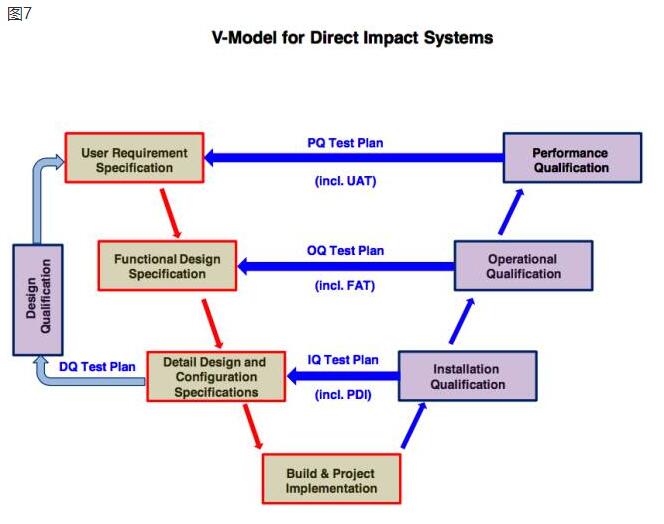
Validation is not a one‑time event – it is a life‑cycle process that begins at the design stage and continues through installation, operation, maintenance and periodic re‑validation. This guide provides engineers and quality professionals with a complete validation framework covering the Validation Master Plan (VMP), Design Qualification (DQ), Installation Qualification (IQ), Operational Qualification (OQ), Performance Qualification (PQ), re‑validation, and documentation requirements.
1.1 What is Validation?
Validation is the documented process of establishing, with a high degree of assurance, that a system will consistently produce results meeting predetermined specifications and quality attributes.
Key definitions:
| Term | Definition |
|---|---|
| Qualification | The act of proving that any equipment or system works correctly and actually leads to the expected results. |
| Verification | Confirmation, through the provision of objective evidence, that specified requirements have been fulfilled. |
| Validation | The documented act of proving that any procedure, process, equipment, material, activity or system actually leads to the expected results. |
1.2 Regulatory Drivers
| Regulation/Guideline | Applicable Scope | Key Validation Requirements |
|---|---|---|
| FDA 21 CFR Part 210/211 | US pharmaceutical manufacturing | cGMP validation, process validation, cleaning validation |
| EU GMP Annex 15 | European pharmaceutical | Qualification and validation requirements |
| ICH Q7 | Active Pharmaceutical Ingredients (API) | Validation of processes, cleaning and analytical methods |
| ISO 13485 | Medical devices | Validation of processes for production and service provision |
| 3‑A Sanitary Standards | Food, dairy, pharmaceutical | Hygienic design and cleanability validation |
2. Validation Master Plan (VMP)
The Validation Master Plan is the top‑level document that defines the validation strategy for the entire project or facility.
2.1 Contents of a VMP
| Section | Content |
|---|---|
| Scope | Which systems and processes are covered by the VMP |
| Organisational structure | Validation team roles and responsibilities |
| Validation strategy | Approach and methodology for each system |
| Schedule | Timeline for validation activities |
| Acceptance criteria | Standards for qualification and validation |
| Documentation requirements | Format and retention of validation records |
| Change control | Procedure for managing changes after validation |
| Re‑validation | Triggers and frequency for re‑validation |
3. Design Qualification (DQ)
Design Qualification provides documented verification that the proposed design meets user requirements and is suitable for the intended purpose.
3.1 DQ Activities
| Activity | Description | Deliverable |
|---|---|---|
| User Requirements Specification (URS) | Define what the system must achieve | URS document |
| Functional Specification (FS) | Define how the system will achieve requirements | FS document |
| Design Review | Review design against URS and standards | Design review report |
| Supplier Assessment | Evaluate supplier capability and quality | Supplier audit report |
| Gap Analysis | Identify gaps between design and requirements | Gap analysis report |
3.2 Key DQ Considerations
Hygienic design: Does the design meet 3‑A, EHEDG or ASME BPE requirements?
Cleanability: Can all internal surfaces be cleaned (CIP/COP)?
Drainability: Can the system be completely drained?
Dead‑leg assessment: Are L/D ratios within acceptable limits?
Materials of construction: Are materials compatible with process fluids and cleaning agents?
Instrumentation: Are instruments suitable for the intended measurement and control?
4. Installation Qualification (IQ)
Installation Qualification provides documented verification that the system is installed correctly according to design specifications and manufacturer recommendations.
4.1 IQ Activities
| Activity | Description | Deliverable |
|---|---|---|
| Documentation verification | Confirm all design documents, manuals and certificates are available | Document register |
| Equipment inspection | Verify equipment matches specifications and is undamaged | Inspection report |
| Installation verification | Check piping connections, supports, slopes, drain points | Installation checklist |
| Instrument calibration | Confirm all instruments are calibrated within validity period | Calibration certificates |
| Utility connections | Verify water, power, steam and compressed air connections | Utility verification report |
| Material verification | Confirm materials of construction (MTRs, heat numbers) | Material traceability report |
| Welding documentation | Verify welder certificates, WPS, PQR, welding logs | Welding documentation package |
4.2 IQ Checklist Highlights
All components installed per design drawings
Piping slopes meet design requirements (≥1% for process, ≥2% for CIP return)
Pipe supports installed at correct spacing
All valves correctly oriented and accessible
Instruments calibrated and tagged with calibration dates
Electrical wiring and grounding verified
Safety systems (interlocks, alarms) tested
Spare parts and special tools available
5. Operational Qualification (OQ)
Operational Qualification provides documented verification that the system operates as intended according to functional specifications under normal and worst‑case conditions.
5.1 OQ Activities
| Activity | Description | Deliverable |
|---|---|---|
| SOP verification | Confirm operating procedures are effective | Approved SOPs |
| Manual and automatic operation | Test all operating modes | Test results |
| Interlock and alarm testing | Verify alarms and interlocks function correctly | Alarm/interlock test report |
| CIP/SIP validation | Verify cleaning and sterilisation cycles meet specifications | CIP/SIP validation report |
| Temperature uniformity | Confirm temperature distribution meets requirements | Temperature mapping report |
| Pressure tests | Verify system integrity under pressure | Pressure test report |
5.2 CIP/SIP Validation in OQ
For CIP/SIP validation, the system must demonstrate:
| Parameter | Requirement | Acceptance Criteria |
|---|---|---|
| CIP temperature | Alkali wash temperature meets setpoint | ±2°C |
| CIP flow rate | Supply velocity ≥1.5 m/s | Measured at all circuits |
| CIP concentration | Alkali/acid concentration within range | ±0.5% of target |
| CIP time | Each phase duration meets specification | ±5% of set time |
| SIP temperature | Steam temperature at all points ≥121°C | Minimum recorded temperature |
| SIP hold time | Sterilisation hold time meets specification | ≥15 minutes at 121°C |
| Condensate drainage | No condensate accumulation | Steam trap function verified |
6. Performance Qualification (PQ)
Performance Qualification provides documented verification that the system consistently produces product meeting quality specifications under routine operating conditions.
6.1 PQ Activities
| Activity | Description | Deliverable |
|---|---|---|
| Process simulation | Run system with process media (or placebo) | Simulation results |
| Three‑batch validation | Validate three consecutive production batches | Three‑batch validation report |
| Critical process parameters | Monitor and verify key process parameters | CPR monitoring log |
| Product quality testing | Test product against quality specifications | Product quality reports |
| Process capability analysis | Calculate Cpk/Ppk for critical parameters | Capability analysis report |
6.2 Three‑Batch Validation
The three‑batch validation approach is the industry standard for demonstrating process consistency:
| Batch | Purpose | Acceptance |
|---|---|---|
| Batch 1 | Establish baseline performance | All quality attributes within specification |
| Batch 2 | Confirm reproducibility | Results comparable to Batch 1 |
| Batch 3 | Demonstrate consistent performance | Results comparable to Batches 1 & 2 |
Note: The number of batches may vary based on process complexity and regulatory expectations. Some regulatory agencies now encourage continuous process verification (CPV) as an alternative to traditional three‑batch validation, using real‑time monitoring and statistical process control (SPC) to demonstrate ongoing process control.
7. Re‑validation
Validation is not a one‑time activity. Systems must be re‑validated when changes occur that could affect performance.
7.1 Triggers for Re‑validation
| Trigger | Description | Extent of Re‑validation |
|---|---|---|
| Change of critical components | Replacement of pumps, valves, instruments with different models | Full or partial re‑validation |
| Change of process parameters | Modification to CIP/SIP parameters | OQ and PQ re‑validation |
| Change of product | New product with different requirements | Process validation (new product) |
| Major maintenance | Significant repair or modification | OQ re‑validation |
| Periodic review | Regular scheduled review (typically 1‑3 years) | Review + targeted testing |
| Failure investigation | Failure or deviation investigation | Corrective action validation |
| Regulatory change | New or updated regulatory requirements | Gap assessment + re‑validation |
7.2 Periodic Re‑validation Frequency
| System Type | Recommended Frequency | Basis |
|---|---|---|
| Pharmaceutical/WFI systems | Annually or every 2 years | FDA/cGMP requirements |
| Critical CIP/SIP systems | Annually | Process validation requirements |
| Food processing systems | Every 2‑3 years | 3‑A / HACCP requirements |
| Utility systems (compressed air, steam) | Every 1‑2 years | Pharmacopoeia requirements |
8. Validation Documentation Package
A complete validation documentation package is essential for regulatory compliance and audit readiness.
8.1 Typical Validation Document Structure
Validation Master Plan (VMP)
  │
  ├── Design Qualification (DQ) Package
  │   ├── URS
  │   ├── FS/DS
  │   ├── Design review report
  │   └── Supplier audit report
  │
  ├── Installation Qualification (IQ) Package
  │   ├── IQ protocol
  │   ├── Installation checklist
  │   ├── Calibration certificates
  │   ├── MTRs and material certificates
  │   ├── Welding documentation
  │   └── IQ report
  │
  ├── Operational Qualification (OQ) Package
  │   ├── OQ protocol
  │   ├── SOP verification
  │   ├── Alarm/interlock test report
  │   ├── CIP/SIP validation report
  │   ├── Temperature mapping report
  │   └── OQ report
  │
  ├── Performance Qualification (PQ) Package
  │   ├── PQ protocol
  │   ├── Three‑batch validation report
  │   ├── Product quality test results
  │   └── PQ report
  │
  └── Validation Summary Report (VSR)
      ├── Executive summary
      ├── Deviation management
      ├── Conclusion and recommendations
      └── Signed approvals
8.2 Document Management Requirements
| Requirement | Description |
|---|---|
| Approval | All validation documents must be approved by qualified personnel |
| Version control | Each document must have a unique revision number and date |
| Retention | Validation records must be retained per regulatory requirements (typically equipment life + 5 years) |
| Accessibility | Documents must be readily accessible for audits |
9. Common Validation Pitfalls & Solutions
| Pitfall | Consequence | Solution |
|---|---|---|
| Incomplete URS | Unclear requirements leading to validation gaps | Invest time in thorough URS development |
| Insufficient IQ testing | Installation issues discovered during OQ or PQ | Perform thorough IQ testing including all components |
| Inadequate OQ worst‑case testing | System fails under actual production conditions | Test at upper and lower operating limits |
| Incomplete document retention | Audit findings, regulatory action | Implement robust document management system |
| Change control not followed | System operates outside validated state | Establish and enforce change control procedures |
| Ignoring re‑validation | System performance drifts | Schedule periodic re‑validation reviews |
10. Why Choose Engineering Plumbing for Validation Services?
At Engineering Plumbing, we provide comprehensive system validation services for pharmaceutical, biotech and food industries:
Validation planning: Development of VMP and validation protocols
DQ services: Design review, gap analysis, URS development
IQ services: Installation verification, documentation review, calibration verification
OQ services: CIP/SIP validation, temperature mapping, alarm/interlock testing
PQ services: Three‑batch validation, process capability analysis, CPV implementation
Re‑validation: Periodic review, change control validation, failure investigation
Documentation support: Complete validation package preparation and review
📞 Validation Consultation
Contact our validation team to discuss your system validation requirements. We will return a preliminary validation plan within 48 hours.
Frequently Asked Questions (FAQ)
1. What is the difference between qualification and validation?
Qualification applies to equipment and systems – it proves that a piece of equipment works correctly. Validation applies to processes – it proves that a process consistently produces results meeting quality specifications. IQ/OQ/PQ are qualification activities that collectively support process validation.
2. When should validation start?
Validation should start at the design phase (DQ). Early validation planning reduces costly rework and ensures the system is designed for validation from the start.
3. What is the difference between OQ and PQ?
OQ tests that the system operates according to specifications under controlled conditions (e.g., empty or with water). PQ tests that the system consistently produces acceptable product under actual production conditions (e.g., with process media, full scale, multiple batches).
4. How many batches are required for PQ?
The industry standard is three consecutive batches (three‑batch validation), demonstrating reproducible performance. For some systems, regulatory agencies may accept fewer batches with strong justification, or continuous process verification (CPV) as an alternative.
5. How often should a system be re‑validated?
Re‑validation frequency depends on system criticality and regulatory requirements:
Pharmaceutical/WFI systems: Annually or every 2 years
Critical CIP/SIP: Annually
Food processing: Every 2‑3 years
Utility systems: Every 1‑2 years
6. What is a Validation Master Plan (VMP)?
A Validation Master Plan is a top‑level document that defines the validation strategy for an entire project or facility. It outlines which systems require validation, the approach, schedule, acceptance criteria, and documentation requirements.
7. Can CIP/SIP be validated during OQ?
Yes. CIP/SIP validation is typically performed during OQ, confirming that cleaning and sterilisation cycles meet temperature, flow, concentration and time specifications.
8. What validation documents should be kept for audit?
All validation documents should be retained, including: VMP, DQ report, IQ protocol and report, OQ protocol and report, PQ protocol and report, calibration certificates, MTRs, welding documentation, validation summary report (VSR), and deviation management records.
9. What is continuous process verification (CPV)?
CPV is an alternative approach to traditional three‑batch validation, using real‑time monitoring and statistical process control (SPC) to demonstrate ongoing process control. It is encouraged by some regulatory agencies as a more robust approach to process validation.
10. How is change control related to validation?
Change control is a procedure for managing changes to validated systems. Any change that could affect product quality must be assessed, and the system may need to be re‑validated. Change control ensures the validated state is maintained.


