


Sanitary Valve Procurement & Management Guide: A Complete Lifecycle Approach
Purchasing sanitary valves is more than selecting a piece of equipment—it is a systematic process that requires balancing compliance, process compatibility, total cost of ownership, and supply chain reliability. For procurement professionals in the food, pharmaceutical, and biotech industries, a wrong choice can lead to product contamination, audit failures, or production downtime.
This guide provides a comprehensive procurement framework—from requirements analysis and supplier evaluation to quality control and lifecycle cost management—helping buyers make informed decisions.
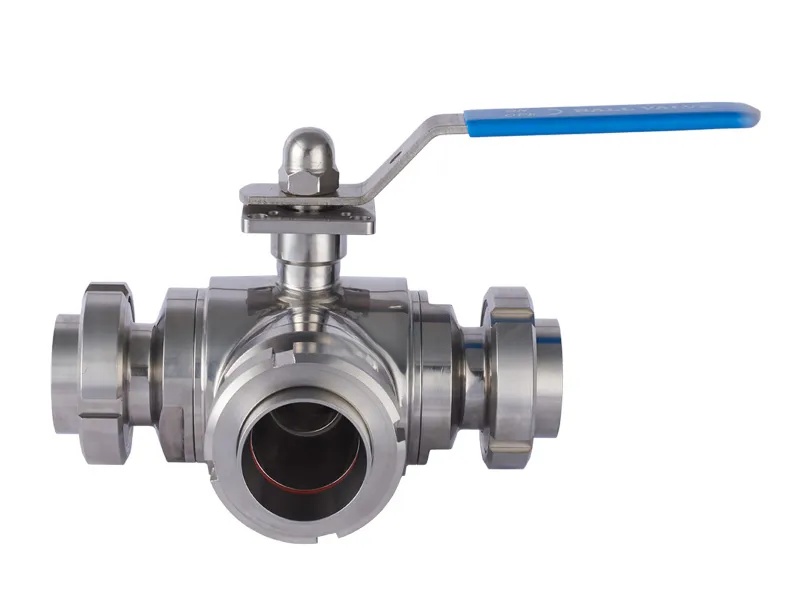
1. Pre-Procurement Requirements Analysis
Before contacting any supplier, clearly define your process requirements. This forms the foundation for all subsequent decisions and helps avoid selection errors.
1.1 Media Characteristics Analysis
Media characteristics are the primary factor in valve selection. Different media impose vastly different requirements on valve materials and construction:
| Media Type | Recommended Body Material | Recommended Seal Material | Notes |
|---|---|---|---|
| Drinking water, milk, neutral liquids | 304 Stainless Steel | EPDM | Moderate cost, sufficient corrosion resistance |
| Fruit juice, acidic beverages, weak acids/alkalis | 316L Stainless Steel | EPDM or PTFE | Molybdenum content resists chlorides and weak acids |
| Strong acids, strong alkalis, organic solvents | 316L Stainless Steel or Hastelloy | PTFE | PTFE offers broadest chemical compatibility |
| Chlorine-containing CIP solutions | 316L Stainless Steel | EPDM | 304 is susceptible to pitting in chlorine environments |
| Oils/fats, organic solvents | 316L Stainless Steel | FKM (Viton) or PTFE | Standard rubber swells in oils |
| High-viscosity media (syrup, creams) | 316L Stainless Steel (full port) | Silicone or EPDM | Full port design eliminates flow resistance |
Case study: A dairy plant used 304 stainless steel valves in a chlorine-containing CIP system. Pitting corrosion occurred within 6 months. For chlorine environments, 316L is the minimum requirement.
1.2 Operating Condition Confirmation
Temperature: Seal material temperature limits are the hard constraint. EPDM typically withstands -40°C to +150°C, silicone -60°C to +200°C, and PTFE -200°C to +260°C. If steam sterilisation (SIP, 121-135°C) is involved, verify long-term seal stability at those temperatures.
Pressure: Sanitary valves typically have pressure ratings of 10-16 bar. High-pressure systems require higher-rated valves.
Flow: Calculate Cv values to ensure the valve meets maximum flow requirements when fully open, with normal operating openings in the 20%-80% range for regulation accuracy.
1.3 Certification Requirements
Different industries and markets have significantly different certification requirements:
| Certification/Standard | Applicable Scope | Core Requirements |
|---|---|---|
| 3-A Sanitary Standards | US dairy, food, pharmaceutical | Hygienic design, cleanability |
| FDA 21 CFR | US food and drug contact materials | Material safety, composition compliance |
| EHEDG | European food, pharmaceutical | Hygienic engineering design certification |
| ASME BPE | Biopharmaceutical | Surface finish, traceability, welding |
| USP Class VI | Pharmaceutical, biotech | Biocompatibility testing |
| GMP/GLP | Pharmaceutical manufacturing | Quality management throughout |
Important: For EU exports, confirm EHEDG certification; for dairy applications, confirm 3-A certification. Missing certifications can result in entire shipments being detained by customs.
2. Supplier Evaluation and Screening
2.1 Supplier Qualification Checklist
When evaluating potential suppliers, systematically assess the following dimensions:
| Assessment Dimension | Check Points | Verification Method |
|---|---|---|
| Quality system | ISO 9001/13485 certificates, inspection capability | Review original certificates |
| Hygienic certifications | 3-A, EHEDG, FDA compliance documents | Request certification copies |
| Material traceability | MTRs, material certificates, heat number records | Sample historical order documents |
| Manufacturing capability | CNC machining, electropolishing, cleanroom assembly | On-site or virtual factory audit |
| Surface finish measurement | Roughness tester availability, report templates | Check calibration certificates |
| Testing equipment | Pressure test equipment, PMI spectrometer | On-site equipment review |
| Delivery performance | On-time delivery rate, order completion rate | Request performance data |
Key documentation: Suppliers should be able to provide EN 10204 3.1/3.2 material traceability documents, surface roughness test reports, leak test reports, and Material Compliance Declarations (MCD).
2.2 Sample Testing
Before bulk procurement, conduct the following validations:
| Test Item | Content | Acceptance Criteria |
|---|---|---|
| Dimensional accuracy | Connection dimensions, bore size | Per drawing or standard |
| Surface finish | Internal Ra value measurement | ≤0.8μm (sanitary) / ≤0.4μm (aseptic) |
| Pressure testing | Shell and seat testing | 1.5× working pressure, no leakage |
| Operation smoothness | Manual or actuated operation | No binding, full stroke achieved |
| CIP compatibility | Simulated CIP cycle | No residue dead legs, fully drainable |
2.3 Regional Sourcing Considerations
Key sanitary valve manufacturing clusters in China:
| Region | Specialisation | Characteristics |
|---|---|---|
| Wenzhou, Zhejiang | Sanitary stainless steel valves | Vertically integrated production, mature industrial cluster |
| Guangdong | High-precision, automation-ready valves | Strong precision machining capabilities |
| Jiangsu | Automation-integrated valves | Mature electric and pneumatic actuator integration |
Prioritise suppliers with vertical integration—from raw material sourcing to CNC machining, electropolishing, and final assembly—to ensure consistent quality for large-volume orders.
3. Key Selection Parameter Verification
3.1 Core Selection Parameters
During technical evaluation, confirm the following key parameters:
| Parameter Category | Specific Parameters | Selection Points |
|---|---|---|
| Construction type | 3-piece / 2-piece | 3-piece allows in-line maintenance—preferred for sanitary applications |
| Port design | Full port / Reduced port | Full port preferred for high-viscosity and particle-containing media |
| Connection type | Tri-clamp / Welded / Threaded / Flanged | Tri-clamp most common; welded for permanent high-purity systems |
| Actuation | Manual / Pneumatic / Electric | Pneumatic if air supply available (best value); electric if no air supply |
| Surface finish | Mechanically polished / Electropolished | Electropolished achieves Ra ≤0.4μm, ideal for aseptic processes |
| Explosion protection | ATEX/IECEx | Required for hazardous areas |
3.2 Seal Material Selection Reference
Seal material directly affects temperature range, chemical compatibility, and service life:
| Seal Material | Temperature Range | Suitable Media | Not Suitable For |
|---|---|---|---|
| EPDM | -40°C ~ +150°C | Water, steam, alkaline CIP | Oils, hydrocarbon solvents |
| Silicone | -60°C ~ +200°C | Food, high-purity media | Steam, strong acids, oils |
| PTFE | -200°C ~ +260°C | Acids, alkalis, solvents | Strong alkalis at high temperatures (creep) |
| FKM (Viton) | -23°C ~ +150°C | Oils, chemicals | Amines, ketones, live steam |
Selection tip: If CIP/SIP cycles are involved, EPDM and PTFE are the most common choices. For oil-containing media, choose FKM or PTFE to avoid swelling.
4. Quality Control and Acceptance
4.1 Receiving Inspection Checklist
Upon delivery, perform the following checks:
| Inspection Item | Content | Acceptance Criteria |
|---|---|---|
| Visual inspection | No rust, deformation, or damage | Visually intact |
| Identification verification | Nameplate matches purchase order | 100% consistent |
| Documentation verification | MTRs, test reports, certificates complete | Complete and correct |
| Surface finish spot check | Internal Ra measurement (sampling) | Meets contract specification |
| Operation check | Manual/pneumatic operation smooth | No binding, correct stroke |
| Pressure testing | Shell/seat testing (sampling) | Per standard acceptance |
4.2 Common Quality Issues and Handling
| Issue | Possible Cause | Resolution |
|---|---|---|
| MTR mismatch with actual material | Supplier management lapse | Reject, initiate corrective action |
| Surface finish below specification | Inadequate polishing process | Return or rework |
| Seal material non-compliant | Non-specified material used | Return, require compliant seals |
| Insufficient actuator torque | Selection error | Replace actuator or reselect |
5. Total Cost of Ownership (TCO) Considerations
Purchase price should not be the sole decision factor. Total Cost of Ownership better reflects the true economic value:
| Cost Component | Percentage (Typical Range) | Description |
|---|---|---|
| Purchase cost | 10-30% | The price of the valve itself |
| Installation cost | 5-15% | Transportation, installation, welding |
| Operating energy | 15-30% | Pump energy from pressure drop |
| Maintenance cost | 10-25% | Seal replacement, periodic servicing |
| Downtime loss | 10-20% | Production loss from valve failure |
Case study: A pharmaceutical plant used standard PTFE seals in a pH adjustment unit. They failed within 3 months due to NaOH corrosion. Switching to PTFE + glass fibre-filled seals extended life to 2 years. Initial cost was slightly higher, but long-term maintenance costs decreased significantly.
6. Common Procurement Mistakes and How to Avoid Them
| Mistake | Consequence | Correct Practice |
|---|---|---|
| Awarding solely on price | Low-quality valves cause frequent repairs and downtime | Use TCO evaluation |
| Ignoring certification requirements | Audit failure, product detention | Confirm all certifications before ordering |
| Skipping sample testing | Quality issues discovered only after bulk arrival | Conduct sample validation before bulk procurement |
| Incomplete technical specifications | Suppliers quote incorrectly | Prepare comprehensive specifications |
| Improper seal material selection | Premature seal failure, leakage | Select seals based on media and temperature |
7. Summary and Recommendations
Sanitary valve procurement is a systematic process. Key recommendations:
Conduct thorough requirements analysis: Define media, temperature, pressure, flow, and certification requirements
Strictly vet supplier qualifications: Focus on ISO, 3-A, EHEDG certifications and material traceability
Never skip sample testing: Validate surface finish, dimensions, and sealing performance before bulk orders
Consider TCO: Look beyond purchase price—factor in maintenance costs and downtime losses
Build long-term partnerships: Establish framework agreements with reliable suppliers to shorten emergency lead times


