


Sanitary Piping System Design Review and Risk Analysis
In the food, pharmaceutical, and biotech industries, decisions made during the piping system design phase have a decisive impact on subsequent operational safety and compliance. Design review and risk analysis are essential tools for ensuring that sanitary piping systems meet product quality, cleaning validation, and regulatory requirements. This guide systematically presents the key points of sanitary piping system design review and commonly used risk analysis methods, helping engineering teams identify and eliminate potential risks early in the project.
1. Why Risk Control at the Design Stage Is Critical
Decisions made during the design phase determine whether the system can meet the following core requirements:
| Core Requirement | Design Determinants |
|---|---|
| Cleanability | Can piping be effectively flushed by CIP cleaning solutions? |
| Drainability | Can the system be completely drained without low-point pooling? |
| Material compatibility | Can materials withstand process media and cleaning agents? |
| Compliance | Does the system meet GMP, 3-A, EHEDG, and other standards? |
The cost of solving problems during the design phase is far lower than discovering them during construction or operation, and it avoids the passive situation of discovering cleaning dead legs only after the system is commissioned.
2. Core Points of Design Review
2.1 Hygienic Design Review Checklist
| Review Item | Check Points | Acceptance Criteria |
|---|---|---|
| Dead legs (L/D ratio) | L/D ratio of all branches | Generally ≤2.0; aseptic processes ≤1.5 |
| Pipe slope | Slope direction and angle of horizontal pipes | Process piping ≥1%; CIP return ≥2% |
| Drainability | Drain points at the lowest points of the system | Complete gravity drainage |
| Surface finish | Internal surface Ra value in contact with product | Sanitary ≤0.8μm; aseptic ≤0.4μm |
| Material selection | Compatibility of body, fittings, and seals with media | 316L preferred; seals selected based on media |
| Connection method | Use of tri-clamp/welded/threaded | Avoid threaded; prefer tri-clamp or welded |
| CIP coverage | Whether all internal surfaces can be covered by CIP | Spray ball coverage testing passed |
| Instrument connections | Design of thermometer, pressure gauge connections | As short as possible; L/D≤2 |
2.2 Equipment and Valve Selection Review
Valve Selection Review Points:
Diaphragm valves for aseptic boundaries and sampling points
Butterfly valves for large-diameter and CIP supply circuits
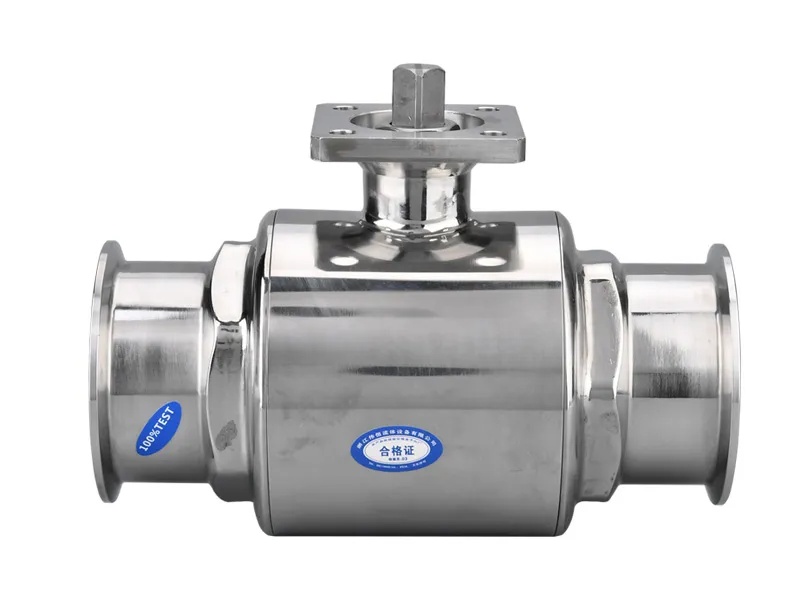
Ball valves: per 3-A 68-01, only suitable for COP (clean-out-of-place)
Check valves installed at pump discharges to prevent backflow
Appropriate set pressure of safety valves
Tank and Vessel Review Points:
Can the vessel be completely drained (bottom slope ≥1%)?
Do spray balls cover all internal surfaces?
Are manways and nozzles designed for easy cleaning?
Are vent lines provided with backflow prevention?
2.3 Cleanability Validation Feasibility Review
The feasibility of cleanability validation should be considered during the design phase:
Are CIP paths covering all piping?
Are sampling points reserved for residue testing?
Have the most difficult-to-clean locations been identified?
Has riboflavin testing been considered in the design?
3. Common Risk Analysis Methods
3.1 HACCP (Hazard Analysis and Critical Control Points)
HACCP is a systematic risk management method for food safety, also applicable to the pharmaceutical industry:
| Step | Content |
|---|---|
| 1. Hazard analysis | Identify all potential biological, chemical, and physical hazards |
| 2. Determine Critical Control Points (CCPs) | Identify points where hazards can be controlled or eliminated |
| 3. Establish critical limits | Set acceptable parameter ranges for each CCP |
| 4. Establish monitoring procedures | Determine how each CCP will be monitored |
| 5. Establish corrective actions | Actions to take when monitoring shows deviation from limits |
| 6. Establish verification procedures | Confirm that the HACCP system is operating effectively |
| 7. Establish record-keeping systems | Complete documentation |
Application in piping system design:
Dead leg locations are Critical Control Points
Critical limit: L/D ≤2
Monitoring: as-built inspection, periodic borescope inspection
3.2 FMEA (Failure Mode and Effects Analysis)
FMEA is a systematic fault prevention method that identifies potential failure modes and their effects, prioritising high-risk issues:
| Assessment Dimension | Score (1-10) | Description |
|---|---|---|
| Severity (S) | Impact of failure on product/patient | 1=minor, 10=catastrophic |
| Occurrence (O) | Likelihood of failure occurrence | 1=rare, 10=very high |
| Detectability (D) | Difficulty of detecting failure | 1=easy to detect, 10=very difficult |
Risk Priority Number (RPN) = S × O × D
Failure modes with RPN above the threshold (e.g., 100) require priority corrective actions.
3.3 Design Review Meetings and Multi-Disciplinary Teams
Design reviews should be conducted by cross-functional teams including:
Process engineers
Quality assurance personnel
Equipment engineers
Validation engineers
Maintenance engineers
End-user representatives
Recommended review cadence:
Preliminary review during conceptual design phase
Two to three progressive, in-depth reviews during detailed design phase
Final review before construction, closing all outstanding issues
4. Common Design Defects and Corrections
| Defect | Consequence | Corrective Action |
|---|---|---|
| Branch L/D > 2 | CIP cannot cover; microbial growth | Shorten branch or relocate |
| No pipe slope | Low-point pooling; CIP failure | Add slope or install drain points |
| Use of standard flanges | Misaligned gasket crevices create dead legs | Use sanitary tri-clamp connections |
| Threaded connections | Thread crevices harbour microbes | Use tri-clamp or welded |
| Overlong instrument connections | Dead legs | Use diaphragm-sealed instruments or shorten connections |
| No low-point drains | System cannot be completely drained | Install drain valves |
| Insufficient spray ball coverage | CIP failure in tanks | Redesign spray ball arrangement |
5. Design Review Output Documents
Upon completion of the design review, the following documents should be generated:
Design review report (including findings and corrective actions)
Design compliance declaration
Dead leg analysis report (including L/D calculations)
Material selection and compatibility report
Preliminary CIP feasibility assessment report


