


Food & Beverage Valve Selection: From Hygienic Design to Compliance Validation – A Complete Guide
In the food and beverage processing industry, valve selection is not just about matching pipe sizes—it directly impacts product safety, regulatory compliance, and production efficiency. From dairy, juice, beer to bottled water, different media impose vastly different requirements on valve materials, seals, and hygienic design. Selecting the wrong valve can lead to batch contamination, regulatory failures, and even consumer health risks.
This guide integrates industry best practices to systematically cover the key dimensions of food and beverage valve selection.
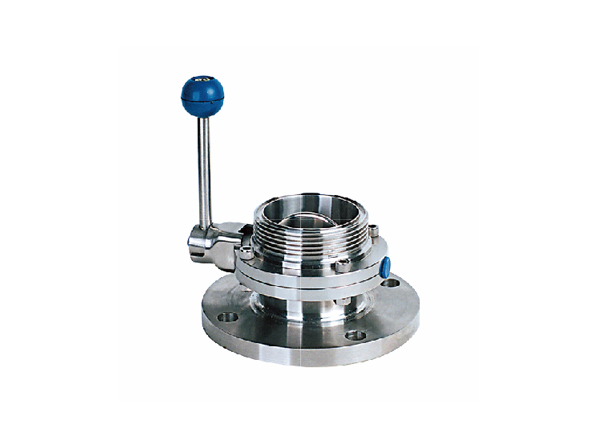
1. First Decision: Sanitary Valve or Utility Valve?
The first step in selection is determining whether the valve contacts the product directly.
| Valve Type | Definition | Key Requirements |
|---|---|---|
| Sanitary valve (process valve) | Direct contact with food/beverage products | Must be cleanable, sterilisable, compatible with cleaning agents; compliant with 3-A, EHEDG, FDA |
| Utility valve | No product contact (steam, cooling water, compressed air) | Hygienic design not required, but must be waterproof and corrosion-resistant to withstand washdown environments |
If a valve is installed in an area requiring hygienic cleaning—even if it does not contact product—it should still be waterproof and compatible with surface cleaning agents to prevent corrosion.
2. Media Characteristics Determine Material Selection
2.1 Body Material
The most common valve body material in the food and beverage industry is 316 stainless steel. Its corrosion resistance and cleanability make it the standard choice for sanitary applications. For highly corrosive media (e.g., concentrated acids, salt solutions), higher-grade materials such as AL-6XN or Hastelloy may be required.
Two critical dimensions of material selection:
Body-to-fluid compatibility: Acidic media require higher molybdenum content (316L); neutral media may tolerate 304
Seal-to-media and cleaning agent compatibility: This is the most error-prone step
2.2 Seal Materials – The Most Overlooked "Trap"
Orange juice warning: Orange juice contains citrus oils that are incompatible with EPDM seals. If EPDM seals are used under these conditions, they will swell within weeks to months, making valve disassembly and sealing impossible.
The reverse is equally dangerous: If the elastomer is incompatible with the cleaning agent, the seal will degrade, leak, and fragments may contaminate the product.
Seal material quick reference:
| Seal Material | Suitable Media | Unsuitable Media | CIP Compatibility |
|---|---|---|---|
| EPDM | Water, alkalis, steam, CIP chemicals | Oils, hydrocarbons, citrus oils | ✅ Excellent |
| PTFE | Strong acids, organic solvents, broad chemicals | Strong alkalis at high temperatures (creep) | ✅ Excellent |
| FKM (Viton) | Oils, high temperature, hop oils | Steam (accelerates aging), ketones | ⚠️ Limited |
| Silicone | Food contact, high purity, low temperature | Steam, oils | ❌ Not steam-resistant |
Key lesson: When evaluating seals, you must simultaneously consider media characteristics, cleaning agent properties, and temperature/pressure ranges.
3. Key Hygienic Design Requirements
3.1 Cleanability (CIP/SIP Compatibility)
Sanitary valves must support CIP (Clean-in-Place) and SIP (Sterilisation-in-Place) processes.
| Requirement | Specification |
| :--- | :--- | :--- |
| Temperature tolerance | Withstand 70-85°C cleaning solutions; some require 121-135°C steam |
| Chemical resistance | Withstand 1-3% NaOH, 0.5-2% acids, peracetic acid, etc. |
| Surface finish | Internal surfaces Ra ≤ 0.8μm (standard sanitary); Ra ≤ 0.4μm (aseptic) |
| Dead-leg-free design | Smooth flow path, fully drainable, no grooves or crevices |
| Flow velocity tolerance | Withstand ≥1.5 m/s CIP flow |
Design distinctions: Sanitary ball valves are suitable for filling lines and CIP systems requiring fast on/off control; diaphragm valves are the preferred choice for aseptic boundaries and sampling points; butterfly valves are commonly used for large-diameter CIP circuits.
3.2 Dead-Leg-Free and Full Drainability
Valve internals must avoid any areas where product residue could remain or where CIP cleaning fluid cannot reach. Prioritise Tri-Clamp quick-connect structures or automatic orbital welding connections.
3.3 Surface Finish
Internal surfaces require mechanical polishing (Ra ≤ 0.8μm) or electropolishing (EP, achieving Ra ≤ 0.5μm or lower) . Pharmaceutical-grade valves typically require EP treatment to reduce microbial adhesion risk. Always request surface roughness test reports from suppliers.
4. Valve Type Comparison for Food & Beverage
| Valve Type | Sanitary Suitability | Best Application | Limitations |
|---|---|---|---|
| Diaphragm valve | ✅ Highest (aseptic boundary preferred) | Aseptic processes, sampling points, WFI systems | Diaphragm requires regular replacement; pressure ≤10bar |
| Seat/mix-proof valve | ✅ High | Product transfer, multi-product lines, CIP systems | Higher cost |
| Butterfly valve | ⚠️ Limited (PMO restricted in dairy) | CIP circuits, large-diameter water treatment | Not permitted for dairy product contact; not suitable for high pressure |
| Ball valve (full port) | ✅ High | On/off control, CIP circuits, high-viscosity media | Per 3-A 68-01: COP only |
| Plug valve | ✅ Medium | Media distribution, flow diversion (stainless steel suitable for food plants) | Not suitable for steam or high-temperature media |
| Sampling valve | ✅ High | Aseptic sampling (fermenters, pipelines) | Requires sterilisation before and after sampling |
Special note on butterfly valves: Butterfly valve applications in the dairy industry are restricted by the FDA Pasteurized Milk Ordinance (PMO) , as their construction does not meet FDA requirements for dairy contact equipment.
On double-seat/mix-proof valves: In multi-product shared lines, mix-proof valves provide Double Block and Bleed (DBB) protection, preventing cross-contamination between different products and enabling dead-leg-free cleaning. The craft brewing industry is increasingly adopting automated mix-proof valves to replace manual butterfly valves for clean production and automated control.
5. Actuation and Automation Considerations
In automated production, actuator selection directly affects response speed and control precision.
| Actuator Type | Advantages | Limitations | Applications |
|---|---|---|---|
| Pneumatic actuator | Fast response (≤1 sec), explosion-proof, clean | Requires compressed air supply | Preferred in food/pharma, CIP circuits |
| Electric actuator | No air supply needed, precise control | Slower response, IP65 protection required | Sites without air supply, precision regulation |
Pneumatic actuators require filter-regulator units to ensure clean air supply. Electric actuators must be fully enclosed (IP65+ protection) to prevent dust accumulation and contamination.
6. Compliance Certifications and Documentation
Different industries and markets have different certification requirements—confirm in advance:
| Certification/Standard | Applicable Scope | Key Requirement |
|---|---|---|
| 3-A Sanitary Standards | US dairy, food | Hygienic design, cleanability |
| EHEDG | European food, pharmaceutical | Hygienic engineering design certification |
| FDA 21 CFR | US food contact materials | Material safety, composition compliance |
| ASME BPE | Biopharmaceutical | Surface finish, traceability |
| NSF 51/61 | Food equipment / beverage contact safety | Material safety |
Documents to request from suppliers:
Material certificates (COA/MTR)
Surface roughness test reports
Leak test reports
Third-party test reports (e.g., SGS hygiene safety testing)
Certification copies
7. Common Selection Mistakes and How to Avoid Them
| Mistake | Consequence | Correct Practice |
|---|---|---|
| Seal-media incompatibility (e.g., EPDM in orange juice) | Seal swelling, valve failure | Check compatibility tables; confirm with supplier for specific media |
| Ignoring cleaning agent impact on seals | Seal degradation, fragments contaminate product | Consider both media and CIP chemical compatibility |
| Threaded connections in sanitary applications | Thread crevices harbour microbes | Use Tri-Clamp or welded connections |
| Selecting by price alone without verifying certifications | Non-compliance leads to product detention | Confirm 3-A, FDA, EHEDG certifications |
| Using butterfly valves in dairy product contact | Does not meet FDA PMO requirements | Use diaphragm or seat valves for dairy |
| Ignoring surface finish requirements | Microbial adhesion, ineffective CIP | Specify Ra value and request test reports |
8. Selection Checklist
| Check Item | Key Requirement |
|---|---|
| Product contact? | Yes → Sanitary valve; No → Utility valve |
| Media-seal compatibility | Oils/hop oils → FKM or PTFE; Water/CIP → EPDM; Orange juice → Do NOT use EPDM |
| Body material | 316L stainless steel is the sanitary standard |
| Surface finish | Ra ≤ 0.8μm (standard) / Ra ≤ 0.4μm (aseptic) |
| CIP/SIP compatible | Withstand 85°C cleaning solutions and cleaning agents |
| Connection type | Tri-Clamp or welded (avoid threaded) |
| Certification requirements | 3-A, FDA, EHEDG as applicable |
| Actuation | Pneumatic if air supply available; Electric if no air supply |


