


The Ultimate Guide to Stainless Steel Manifolds for Water Treatment Systems
When designing or upgrading a water treatment system – whether for reverse osmosis, filtration, chemical dosing, or distribution – one component plays a central role in efficiency, reliability, and long‑term maintenance: the stainless steel manifold.
A well‑designed manifold simplifies pipe connections, balances flow distribution, and reduces potential leak points. But not all manifolds are created equal. This guide explains why stainless steel is the preferred material, what to look for when choosing a manifold, and how the right design can improve your water treatment operation.
Why Stainless Steel for Water Treatment Manifolds?
Water treatment environments demand materials that resist corrosion, handle pressure fluctuations, and maintain hygiene. Stainless steel – especially grades 304 and 316 – offers clear advantages over plastic, brass, or coated carbon steel.
| Property | Benefit for Water Treatment |
|---|---|
| Corrosion resistance | Resists chlorine, salt, and acidic or alkaline chemicals. Grade 316 (with molybdenum) is ideal for high‑chloride or brackish water. |
| High strength | Withstands higher working pressures without wall thickening, allowing compact designs. |
| Temperature stability | Suitable for hot water, steam sterilization, or extreme cold. No embrittlement or softening. |
| Hygienic surface | Smooth internal finish (≤0.8µm Ra) prevents biofilm formation and is easy to clean – critical for potable water or food‑grade applications. |
| Long service life | A properly specified stainless steel manifold can last 20+ years with minimal maintenance. |
✅ Recommendation
For standard reverse osmosis or filtration systems, SS304 is cost‑effective. For seawater, high‑chlorine feed water, or outdoor installations, choose SS316.
Key Selection Criteria for a Stainless Steel Manifold
Choosing the right manifold involves more than just pipe size. To get reliable performance, consider these five factors:
1. Port Configuration & Number of Outlets
Define exactly how many branch lines you need – for example, 4‑way, 8‑way, or custom. Each outlet should have individual isolation valves (ball valves or needle valves) for maintenance without system shutdown.
Common configurations:
1 inlet → multiple outlets (distribution manifold)
Multiple inlets → 1 outlet (collection manifold for RO permeate)
2. Connection Type
Match your existing pipework and valves:
| Connection | Best for |
|---|---|
| Threaded (NPT / BSPP) | Lower pressure, easy field assembly, general water treatment |
| Flanged | Large diameters (≥DN50) and high pressure |
| Sanitary tri‑clamp | Food, beverage, or pharmaceutical water systems where frequent disassembly is needed |
| Welded or orbital | Permanent, leak‑free installations in critical or high‑purity systems |
3. Valve Integration
A high‑quality water treatment manifold should include valves at each outlet. Options include:
Stainless steel ball valves – full port, low pressure drop
Needle valves – precise flow regulation
Check valves – prevent backflow in each branch
Ask your manufacturer whether valves are pre‑assembled and pressure‑tested.
4. Pressure Rating & Temperature Range
Confirm the manifold’s maximum working pressure (e.g., 10 bar, 16 bar, or 20 bar) and temperature range. For hot water or steam‑sterilized systems, ensure the gasket/seal material (PTFE, EPDM, or FKM) is compatible.
5. Surface Finish & Internal Cleanliness
For potable water or pharmaceutical applications, internal surface roughness (Ra) should be ≤0.8µm. Specify whether the manifold is delivered degreased and passivated to remove welding scale and improve corrosion resistance.
Common Applications in Water Treatment
Stainless steel manifolds are used throughout water treatment plants and packaged systems:
| Application | Typical Manifold Role |
|---|---|
| Reverse osmosis (RO) skids | Distribute feed water to multiple membrane housings; collect permeate and concentrate. |
| Media filtration (sand, carbon, greensand) | Connect several filter vessels in parallel for equal flow distribution. |
| Chemical dosing systems | Small manifolds with injection quills for coagulants, antiscalants, or pH adjusters. |
| Ultrafiltration (UF) / microfiltration (MF) | Feed and permeate manifolds for multi‑bank membrane racks. |
| Industrial water distribution | Supply cooling towers, boilers, or process equipment from a main header. |
Case example
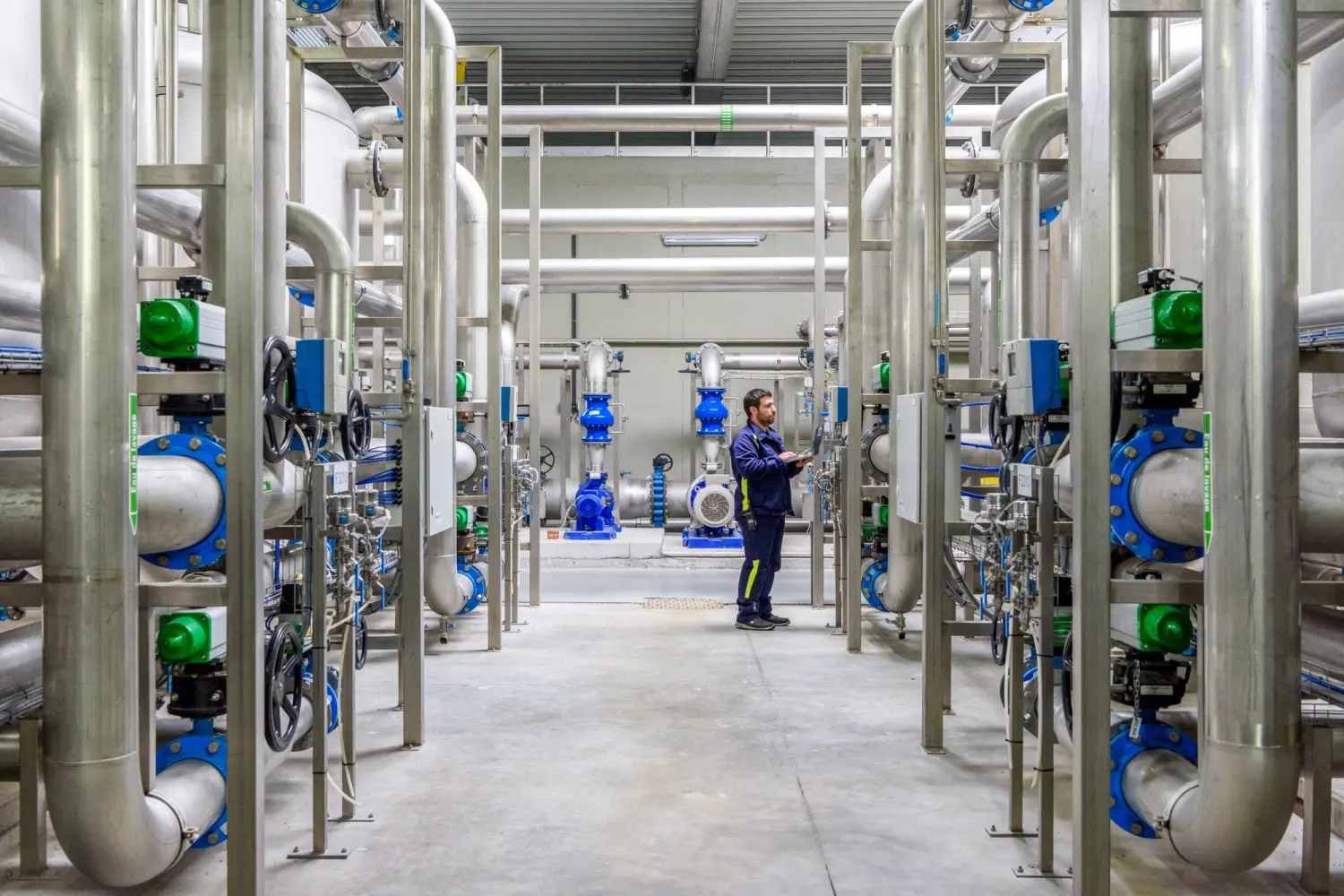
A municipal water treatment plant replaced a PVC manifold with a custom SS316 12‑outlet manifold from Engineering Plumbing. Results: zero leaks in 3 years, easier valve operation, and no chlorine degradation.
Mistakes to Avoid When Sourcing a Manifold
Even experienced engineers sometimes overlook these points:
❌ Undersized internal bore – Reduces flow and increases pressure drop. The manifold’s internal cross‑sectional area should at least equal the sum of open outlet areas.
❌ Mismatched threads – NPT vs. BSPP are not compatible. Always specify thread standard.
❌ No pressure test certification – Always request a factory pressure test report (1.5x working pressure).
❌ Ignoring dead legs – In sanitary designs, avoid “dead legs” where stagnant water can breed bacteria. Use zero‑dead‑leg valve configurations.


