


Why Stainless Steel Manifolds Are Critical for Data Center Cooling Efficiency
With the explosive growth of AI, high‑performance computing, and cloud workloads, rack power densities in data centers are rapidly climbing from traditional 5–10 kW per rack to 30 kW, 50 kW, and even beyond 100 kW. Traditional air cooling can no longer handle the thermal demands of high‑density racks. Liquid cooling – especially cold‑plate liquid cooling and immersion cooling – is becoming the standard for both new and retrofit data centers.
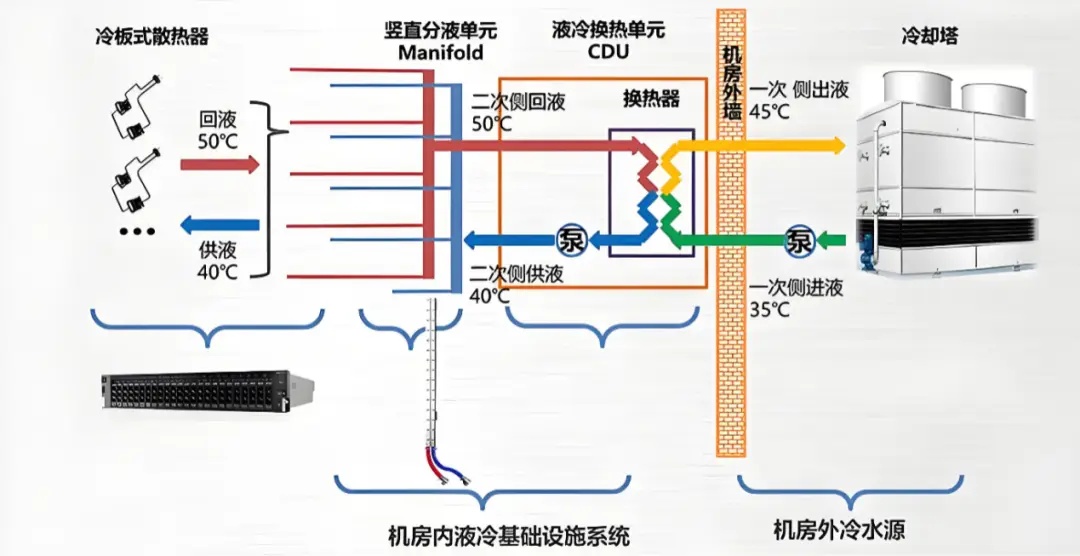
In a liquid cooling system, one seemingly basic but extremely critical component is the coolant distribution manifold. Located between the cooling distribution unit (CDU) and individual server racks or chip cold plates, it is responsible for distributing coolant evenly and stably to each branch and returning the heated fluid back to the CDU for secondary heat exchange.
If the manifold is poorly designed – poor corrosion resistance, undersized internal flow path, high leak risk at ports – the efficiency, reliability, and safety of the entire liquid cooling system are severely compromised. Stainless steel manifolds, with their excellent corrosion resistance, mechanical strength, and full‑port design, have become the preferred choice for high‑reliability data center liquid cooling systems. Here is why.
1. Corrosion Resistance – The Foundation of Long‑Term Operation
The coolants used in data center liquid cooling systems are typically deionized water + corrosion inhibitor or dielectric fluids (such as fluorinated fluids or propylene glycol‑water solutions). Although deionized water itself has low corrosivity, long‑term circulation with temperature changes, dissolved oxygen, and galvanic corrosion between dissimilar metals still poses risks.
Brass or zinc‑plated carbon steel manifolds: After prolonged contact with warm coolant, they are prone to pitting, zinc precipitation, or copper ion leaching, which contaminates the coolant, accelerates inhibitor depletion, and can even clog micro‑channel cold plates.
Plastic manifolds (e.g., PVC, PP) : While corrosion‑resistant, they have poor mechanical strength, are prone to cracking under aging and pressure fluctuations, and often fail to meet high flame‑retardant standards (UL 94 V‑0).
Stainless steel manifolds (SS304 / SS316L) : Offer excellent resistance to pitting and stress corrosion cracking. SS316L contains molybdenum (Mo), making it especially suitable for chloride‑containing glycol solutions or specialized cooling media.
✅ Data Center Recommendation
For typical liquid cooling systems using deionized water + glycol, SS304 is sufficient. If the coolant contains inhibitor additives or if operating temperatures exceed 50°C for long periods, SS316L is recommended for extended service life.
2. Full‑Port Design – Eliminating Pressure Drop and Improving Pumping Efficiency
In a liquid cooling system, pressure drop directly affects circulation pump power consumption and the uniformity of coolant flow distribution. Every additional meter of pipe or local restriction requires the pump to consume more electrical energy to overcome, ultimately impacting PUE (Power Usage Effectiveness).
A key advantage of stainless steel manifolds is the ability to achieve a full‑port design: the internal bore diameter of the main manifold matches the inner diameter of the inlet/outlet pipes, with no reductions or steps.
In contrast:
Reduced‑port manifolds: The internal flow path suddenly narrows, creating local turbulence and additional pressure drop. At high flow rates for a 30–50 kW rack, a single reduced‑port manifold can generate 0.5–1 bar of pressure drop, and the whole system can lose 5–10% of pump power.
Full‑port stainless steel manifolds: The flow path is smooth, and pressure drop is only 10–20% that of a reduced‑port design. For a large data center (thousands of racks), this difference can save tens of thousands of kWh per year.
3. Leak Risk Control – Stainless Steel Welding and High‑Grade Sealing
The most feared risk in data center liquid cooling is leakage – a coolant leak onto server motherboards or GPUs can cause short circuits, data loss, or even fire. Therefore, every fitting, valve, and manifold in the liquid cooling system must have an extremely high level of leak protection.
Stainless steel manifolds offer inherent advantages in leak control:
Integral welded construction: High‑quality stainless steel manifolds use automatic orbital welding or TIG welding for the main flow channel, eliminating threaded connections that can loosen and leak due to vibration or thermal cycling.
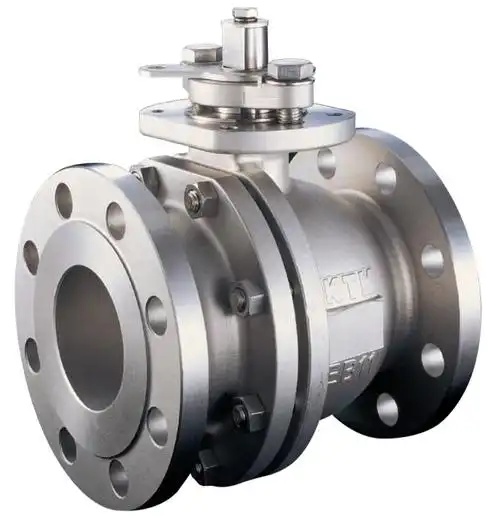
Reliable valve‑end connections: Outlet valves (ball or needle valves) are attached to the manifold body using seal‑welded or ferrule/tri‑clamp connections, and undergo 100% pressure testing (1.5x working pressure, held for at least 30 minutes).
All‑metal or PTFE seals: For the valves themselves, stainless steel manifolds can be specified with PTFE seats or all‑metal sealing structures that withstand long‑term thermal cycling without creep or leakage.
📌 Engineering Practice
Leading hyperscale data centers (e.g., Microsoft, Meta liquid cooling solutions) require all coolant distribution components to pass pressure cycle tests (e.g., 10°C to 50°C, 1000 cycles with zero leakage). Stainless steel manifolds easily meet such stringent requirements, while plastic or die‑cast parts often fail.
4. Precise Flow Distribution – Independent Valves and Adjustability
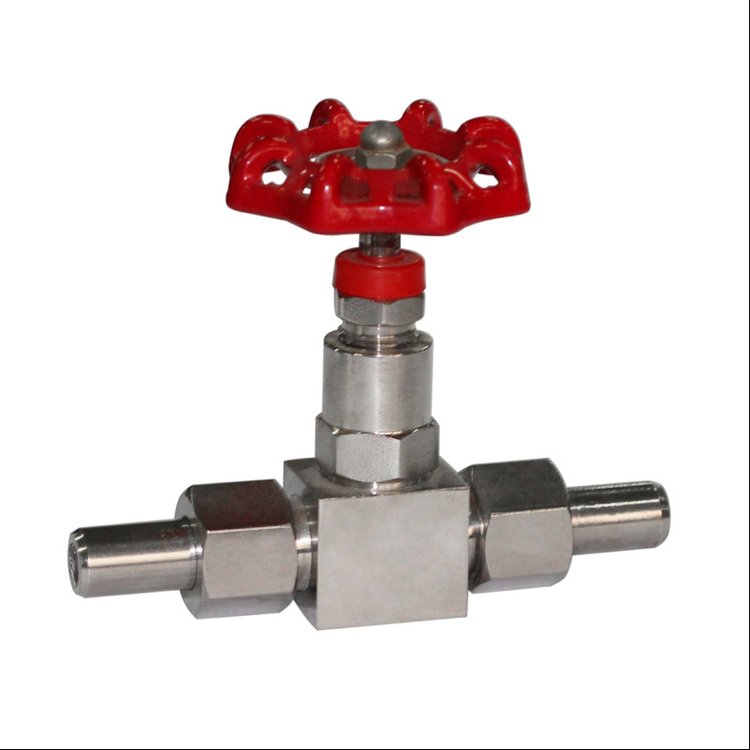
Within a single rack, different servers may have different computing loads, requiring different coolant flow rates to their cold plates. Stainless steel manifolds can incorporate independent ball valves or needle valves at each outlet for per‑port flow adjustment.
Ball valves – Suitable for on/off control, very low pressure drop when fully open.
Needle valves – Ideal for applications that require fine flow adjustment, such as branch balancing in cold‑plate liquid cooling.
Benefits of this design:
Balances server temperatures – Prevents some servers from overheating while others run too cold.
Flexible for heterogeneous computing – When a rack mixes GPU servers and CPU servers, flow can be allocated on demand.
Ease of maintenance – When a server’s cold plate or tubing needs replacement, only its branch valve needs to be closed, without affecting other equipment in the same rack.
5. Flame Retardancy and Long‑Term Reliability
Data centers have strict requirements for material flame retardancy (UL 94 V‑0 or higher). Even with added flame retardants, plastic manifolds can lose their flame‑retardant properties over time due to heat exposure, and they can release toxic smoke if burned. Stainless steel is a non‑combustible material (Class A) and fully meets the highest fire safety standards for data centers.
Moreover, stainless steel manifolds are typically designed for a service life of over 20 years without replacement, while plastic or brass products may suffer aging, cracking, or dezincification corrosion after 5–8 years, leading to unpredictable maintenance costs and downtime.
Common Application Scenarios
Typical deployments of stainless steel manifolds in data center cooling include:
| Application | Manifold Role | Recommended Configuration |
|---|---|---|
| Cold‑plate liquid cooling (direct‑to‑chip) | Distribute coolant from CDU to each cold plate, collect return flow | SS316L, full port, needle valves at outlets, ferrule or tri‑clamp connections |
| Single‑phase immersion cooling | Distribute coolant to heat exchangers in multiple immersion tanks | SS304, large diameter, flanged or welded connections |
| Rear door heat exchanger (RDHx) | Distribute coolant to multiple heat exchanger coils at the rear of the cabinet | SS304, 2–6 outlets, ball valve control |
| Liquid cold plate test stand | Simulate multi‑branch flow to test thermal characteristics of different servers | Custom manifold with flow meter ports |
Why Choose Engineering Plumbing as Your Data Center Cooling Manifold Supplier?
At Engineering Plumbing, we provide custom stainless steel manifold solutions for data center liquid cooling systems:
Materials: SS304, SS316L, duplex stainless steel, with full material test reports (MTRs)
Configuration: 2 to 24 outlets, full‑port design, pressure‑drop optimized
Valve integration: Stainless steel ball valves, needle valves, check valves – pre‑assembled and pressure tested
Connection types: Ferrule (compression), tri‑clamp, female thread (NPT/BSPP), weld ends
Quality assurance: 100% pressure test (1.5x working pressure) + passivation + surface finish inspection (Ra ≤ 0.8 μm)
Certification: Compliance documentation to ASTM/ASME standards available
📞 Data Center Cooling Project Inquiry
Send us your requirements: rack power density, coolant type, number of outlets per rack, connection size, and target pressure drop. Our engineering team will reply with CAD drawings and a quotation within 48 hours.
Frequently Asked Questions (FAQ)
1. How much more expensive is a stainless steel manifold compared to plastic?
Initial purchase cost for stainless steel is typically 30–50% higher than plastic. However, considering 20 years of maintenance‑free operation, zero leak risk, and electricity savings from lower pressure drop, the total cost of ownership is significantly lower for stainless steel.
2. How important is full‑port design for data center cooling?
Extremely important. At high flow rates (e.g., 5–10 L/min per rack), the pressure drop of a reduced‑port manifold can account for more than 20% of the total system pressure drop. Full‑port reduces this portion by about 90%, directly cutting pump power consumption.
3. Does each outlet really need a valve?
Strongly recommended. Independent valves allow per‑server flow adjustment and isolation of a single branch for maintenance without affecting the entire rack, greatly improving operational flexibility.
4. Can stainless steel manifolds work with different types of coolants?
Yes. SS304/SS316L are compatible with deionized water, glycol‑water solutions, propylene glycol‑water solutions, and most dielectric fluids (e.g., fluorinated fluids). Please provide the specific fluid so we can confirm seal material compatibility.
5. Can you supply a small‑batch manifold for testing?
Yes. We offer small‑batch customisation, minimum order quantity of 1 piece. Lead time for standard configurations is 7–10 days.


