


Stainless Steel vs. Brass vs. Plastic Manifolds – A Comparative Analysis
When designing a fluid distribution system, the material choice for the manifold directly affects reliability, energy efficiency, maintenance costs, and service life. The three most common materials – stainless steel, brass, and plastic – each have their own strengths and weaknesses, but not every material is suitable for every application.
This guide provides a comprehensive comparison across six dimensions: corrosion resistance, mechanical strength, pressure drop characteristics, temperature tolerance, cost, and typical applications. It will help engineers and technical buyers make better‑informed decisions.
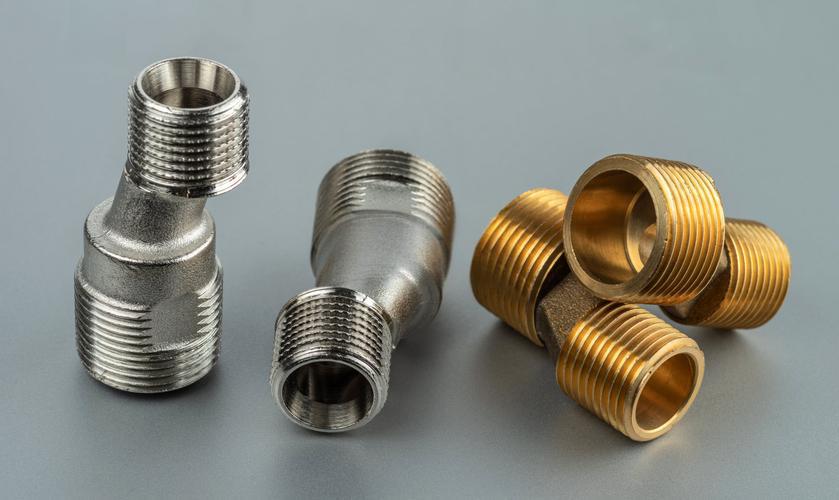
1. Key Performance Comparison – Summary Table
The table below summarises the key differences between the three materials:
| Performance Metric | Stainless Steel (SS304/316) | Brass (C37700 / CW617N) | Plastic (PVC / PP / PVDF) |
|---|---|---|---|
| Corrosion resistance | ⭐⭐⭐⭐⭐ Excellent (SS316L with Mo, chloride‑resistant) | ⭐⭐ Moderate (dezincification, not acid/alkali resistant) | ⭐⭐⭐⭐ Good (resists most acids/alkalis, not solvents) |
| Mechanical strength | ⭐⭐⭐⭐⭐ Very high | ⭐⭐⭐ Medium | ⭐⭐ Low (prone to aging & cracking) |
| Max working pressure | 20–40 bar (DN15–50) | 10–20 bar | 5–10 bar (decreases with temperature) |
| Temperature range | -50°C to +200°C | -20°C to +120°C | PVC: 0–60°C; PP: 0–90°C; PVDF: -20–140°C |
| Full‑port feasibility | ✅ Easy | ✅ Possible but costlier | ❌ Usually reduced‑port (wall thickness limits) |
| Leak risk | Very low (welded or high‑quality seals) | Medium (threaded connections loosen over time) | Higher (thermal expansion/contraction leaks) |
| Flame retardancy | Class A (non‑combustible) | Class B (difficult to ignite) | Typically HB to V-2 (requires additives) |
| Relative cost (same spec) | High (1.0x baseline) | Medium (~0.5–0.6x) | Low (~0.3–0.4x) |
| Design life | 20–30 years | 8–15 years (shorter in poor water quality) | 5–10 years (UV/heat accelerate aging) |
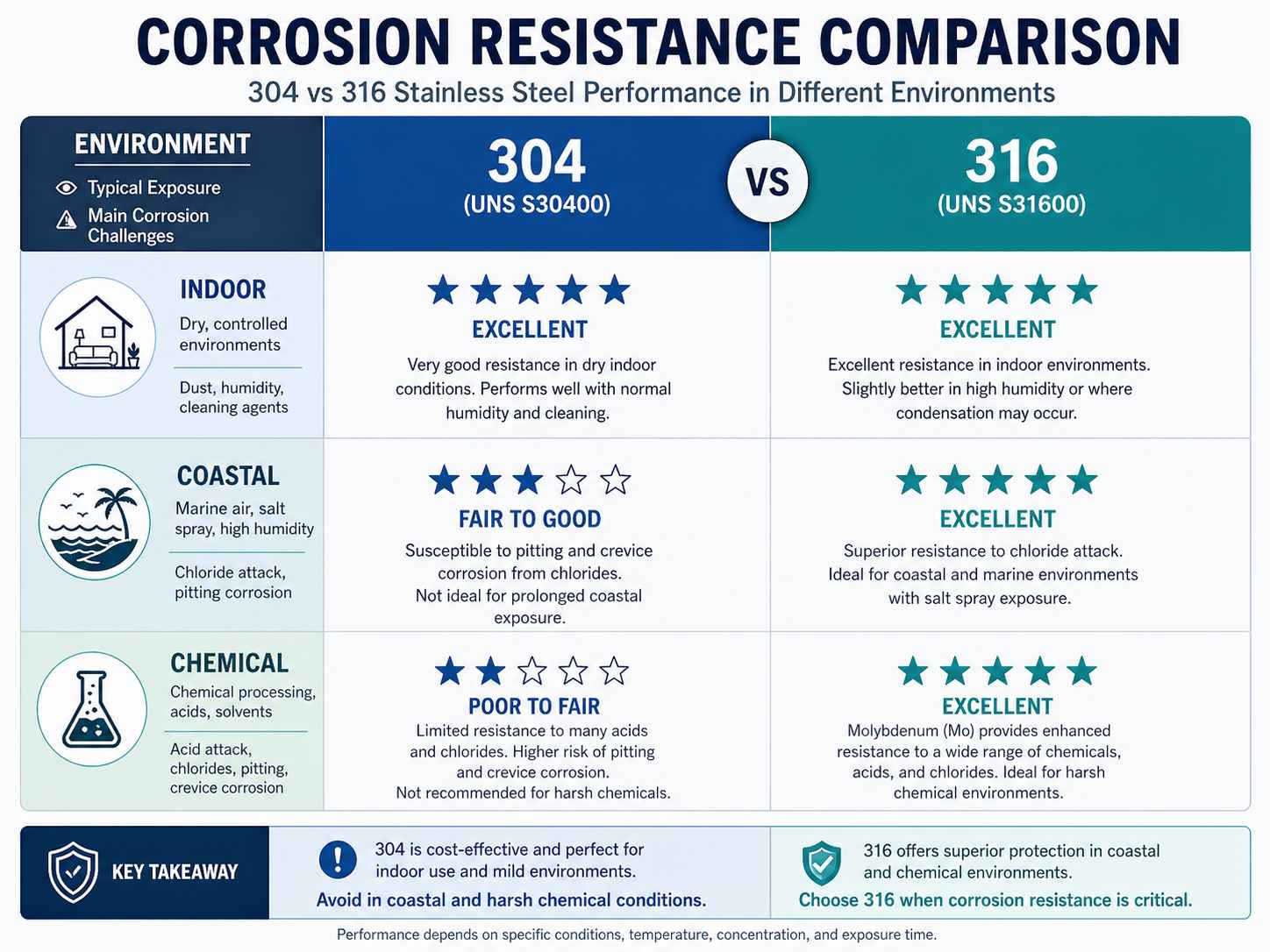
2. Corrosion Resistance – Detailed Look
Stainless Steel (SS304 / SS316L)
Advantages: Chromium (Cr) content ≥18% forms a passive oxide layer that resists oxidation and pitting. SS316L adds molybdenum (Mo), giving superior resistance to chlorides (seawater, brine) and acidic media.
Limitations: In oxygen‑deprived, high‑chloride environments, crevice corrosion or stress corrosion cracking (SCC) may occur – but these extreme conditions are rare in water treatment, data centers, or food industry.
Typical applications: Drinking water, reverse osmosis permeate, deionised water, glycol coolants, weak acids/alkalis.
Brass (copper‑zinc alloy)
Advantages: Good machinability, low‑cost threaded connections, reasonable corrosion resistance in neutral water and oils.
Limitations: Dezincification is a common failure mode in oxygenated water, leading to clogging, strength loss, and leakage. Brass is not resistant to ammonia, strong acids, or most cleaning chemicals.
Typical applications: Low‑pressure compressed air, closed heating systems (stable water quality), instrumentation tubing.
Plastic (PVC / PP / PVDF)
Advantages: Excellent resistance to strong acids, strong alkalis, and many salt solutions. No galvanic corrosion, good electrical insulation.
Limitations: Sensitive to UV, organic solvents (e.g., toluene, acetone), and high temperatures. Long‑term exposure to internal pressure and temperature cycling causes creep and cracking. Poor flame retardancy; releases toxic smoke when burned.
Typical applications: Chemical dosing lines, lab wastewater, electroplating fluid transfer (temperature below 60°C).
3. Mechanical Strength & Pressure Ratings
Stainless steel: Tensile strength ≥500 MPa (SS304). Can withstand working pressures up to 40 bar. Suitable for high‑pressure RO systems, hydraulic systems, and industrial cooling.
Brass: Tensile strength ~300–400 MPa, but cast brass is brittle and prone to stress cracking at thread roots. Typically designed for pressures not exceeding 20 bar.
Plastic: Tensile strength only 1/10 to 1/5 that of stainless steel. Pressure rating drops sharply with temperature: e.g., PVC at 20°C = 10 bar, but at 50°C = only 5 bar.
4. Pressure Drop & Flow Efficiency
The internal flow path design of a manifold directly affects system pressure drop. Full‑port is the key to low pressure drop.
Stainless steel: Can be made full‑port – the internal bore matches the pipe ID, providing minimal flow resistance. Ideal for high‑flow applications (data centre liquid cooling, RO systems).
Brass: Can also be machined full‑port, but due to casting limitations, reduced‑port products are common in the market. At the same size, pressure drop is slightly higher than stainless steel because of slightly rougher internal surfaces.
Plastic: Due to required wall thickness, injection‑moulded plastic manifolds are almost always reduced‑port. At the same flow rate, pressure drop can be 3–5 times higher than a full‑port stainless steel manifold, significantly increasing pump power consumption.
5. Temperature & Flame Retardancy
| Material | Max continuous operating temp | Low‑temp performance | Flame retardancy |
|---|---|---|---|
| Stainless steel | 200°C | No brittle point | Class A (non‑combustible) |
| Brass | 120°C | Impact toughness drops below -20°C | Class B |
| PVC | 60°C | Becomes brittle below 0°C | UL 94 V-2 (additives required) |
| PP | 90°C | Good low‑temp resistance | HB |
| PVDF | 140°C | Excellent | V-0 (achievable) |
For high‑safety applications such as data centers and semiconductor fabs, the non‑combustible nature of stainless steel is often mandatory.
6. Cost & Total Cost of Ownership (TCO)
Although stainless steel has the highest initial purchase cost, its total cost of ownership is often the lowest in the following scenarios:
Long operation (>10 years): Stainless steel requires no replacement, while plastic and brass may need 1–2 replacements, plus downtime losses.
Leak‑sensitive applications: Stainless steel with welded or high‑quality seals has extremely low leak rates, avoiding expensive equipment damage and repairs.
High energy efficiency requirements: Full‑port stainless steel manifolds reduce system pressure drop, and the annual electricity savings can offset the initial price difference.
Brass can be cost‑effective in low‑pressure, non‑corrosive, intermittent applications (e.g., temporary test stands, compressed air branches).
Plastic is suitable for room‑temperature, low‑pressure, highly corrosive media (e.g., acid pickling baths) where leak and fire risks are acceptable.
7. Application‑Specific Selection Guide
| Application | Recommended Material | Reason |
|---|---|---|
| Data centre liquid cooling (CDU to rack) | Stainless steel SS316L | Full‑port, low ΔP, non‑combustible, leak‑free, >20 year life |
| Water treatment RO (high pressure) | Stainless steel SS304/316 | Corrosion resistant, withstands 40 bar |
| Food / beverage / pharmaceutical sanitary | Stainless steel SS316L | Hygienic surface, easy to clean, FDA compliant |
| HVAC closed loop (glycol) | Stainless steel or brass | Brass can be used if water quality is stable; stainless steel more durable |
| Chemical dosing (acids/alkalis) | Plastic (PVDF or PP) or stainless steel | Plastic resists strong acids, stainless steel for weak acids |
| Compressed air distribution (dry) | Brass or stainless steel | Brass offers good value; stainless steel for high‑purity requirements |
| Outdoor / exposed installation | Stainless steel | UV resistant, weather‑resistant |
| Temporary / low‑cost water distribution | Plastic | Single use or short‑term, low cost |
8. Common Misconceptions
❌ “Plastic never corrodes”
Plastic does not rust, but it can fail due to UV degradation, solvent swelling, and thermo‑oxidative aging – it still requires periodic replacement.
❌ “Brass is suitable for all water systems”
Brass is prone to dezincification in soft water or deionised water, leading to valve seizure or leakage. In potable water systems, low‑lead or dezincification‑resistant brass (DZR) must be used.
❌ “Stainless steel is too expensive to be cost‑effective”
In critical applications requiring high reliability and long life, the TCO of stainless steel is often lower than that of plastic or brass – because it avoids downtime, leaks, and premature replacement.
9. Engineering Plumbing’s Solutions
At Engineering Plumbing, we recommend the most suitable manifold material based on your specific operating conditions:
Stainless steel (SS304 / SS316L / Duplex) – Full‑port custom designs, 2–24 outlets, integrated ball/needle valves, 100% pressure test + passivation
Brass – Only for clearly defined, non‑corrosive, low‑pressure systems (water quality report required from user)
Plastic – Generally not stocked; can be custom‑made for special requirements (e.g., PVDF for strong acids)
📞 Material Selection Consultation
Send us your fluid composition, temperature, pressure, flow rate, and installation environment. We will reply with a material recommendation report and CAD proposal within 48 hours.
Frequently Asked Questions (FAQ)
1. When is stainless steel absolutely necessary?
Choose stainless steel if any of the following conditions exist: working pressure >16 bar; temperature >80°C or <-10°C; fluid contains chlorides or acids; Class A flame retardancy required; design life >15 years.
2. Can brass manifolds be used for drinking water?
Yes, but low‑lead brass (lead content ≤0.25%) with NSF/ANSI 61 certification must be used. Ordinary brass leaches lead and does not meet drinking water standards.
3. How long does a plastic manifold last?
Under ideal indoor, room‑temperature, UV‑free, non‑pressure‑surge conditions, PVC/PP life is about 5–8 years. Outdoors or at elevated temperatures, embrittlement can occur in 2–3 years.
4. Is there a typical cost difference between stainless steel and plastic?
For a 1‑inch, 6‑outlet manifold with ball valves: stainless steel ~$120–180, brass ~$70–100, plastic ~$40–60. However, over a 10‑year period, stainless steel is often more economical because of no replacement and energy savings.
5. Can manifolds of different materials be mixed in the same system?
Mixing can cause galvanic corrosion. For example, when stainless steel and brass are directly connected, the brass will corrode faster. Use dielectric unions or ensure material compatibility.


