


Sanitary Butterfly Valve Selection Guide for Food, Pharma & Biotech
In the food, dairy, beverage, pharmaceutical and biotech industries, the sanitary butterfly valve is one of the most commonly used flow control components. It is compact, lightweight, offers low pressure drop and is easy to clean. It is widely used for CIP circuit switching, on/off control in large‑flow pipelines, and conveying powder and viscous media.
However, not all valves labelled “sanitary” meet industry regulatory requirements. The eccentricity type of the disc, seat seal material, surface finish, cleanability certification and actuator selection all directly affect product safety, cleaning efficiency and sterility assurance on your production line.
This guide provides a complete six‑dimension selection framework for engineers and technical buyers.
1. Core Construction Types of Sanitary Butterfly Valves
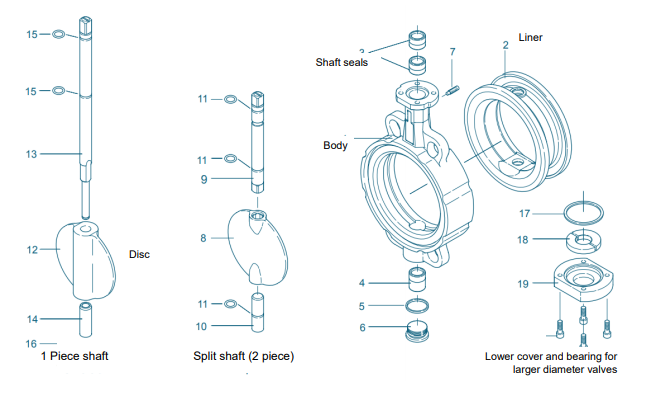
Based on the eccentricity design between the disc and the stem, sanitary butterfly valves can be classified into three types:
| Type | Construction Feature | Application |
|---|---|---|
| Concentric (zero‑offset) | Disc rotation centre coincides with valve body centre and sealing face centre; seat and disc remain in contact throughout travel | Low pressure, ambient temperature, non‑abrasive media – most economical sanitary butterfly valve |
| Single‑offset | Disc rotation centre offset from valve body centre, reducing friction during opening | Medium pressure, extended seat life |
| Double‑offset | Disc rotation centre offset from both valve body centre and sealing face centre; disc quickly lifts off the seat upon opening | High pressure, high temperature, frequent cycling – minimal seat wear, preferred for pharma and biotech |
✅ Selection Recommendation
For most food and dairy applications, concentric type is sufficient. For pharmaceutical, biotech and steam‑sterilized processes, double‑offset is recommended because of its significantly longer seat life and better cleanability.
2. Body Material & Surface Finish
2.1 Stainless Steel Grades
| Material | Application |
|---|---|
| SS304 | General food contact, lower cost |
| SS316L | Pharmaceutical, biotech, high‑chloride environments – contains molybdenum for superior corrosion resistance |
How to verify – Request the Material Test Report (MTR/Mill Test Report) confirming compliance with ASTM A351 CF8M or AISI 316L.
2.2 Surface Finish
The interior surfaces that contact the product must be smooth to prevent microbial adhesion. The standard requirement for sanitary butterfly valves is Ra ≤ 0.8 μm (32 μin) . For aseptic applications, electropolished finishes are recommended, achieving Ra ≤ 0.4 μm or lower.
3. Seat (Seal) Material Selection
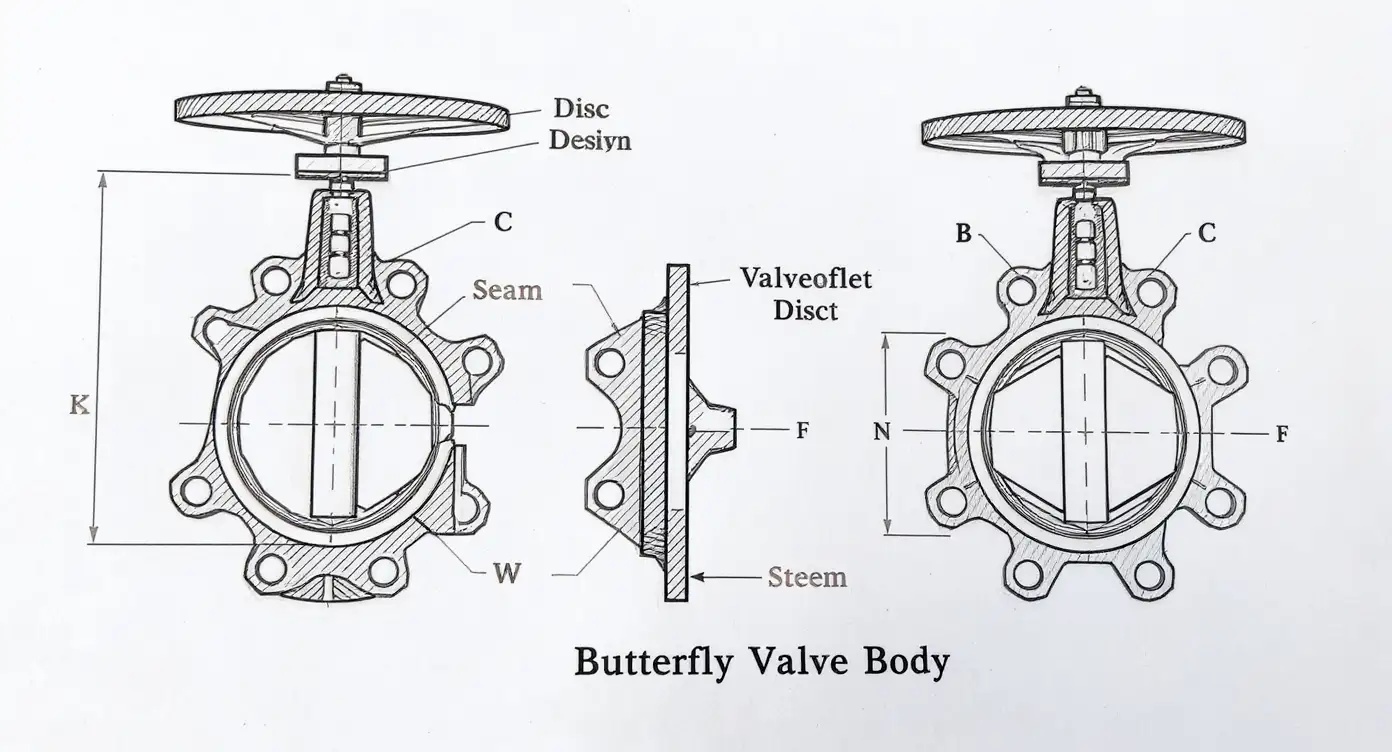
The seat material of a sanitary butterfly valve directly affects sealing performance, temperature range and chemical compatibility.
| Seat Material | Temperature Range | Key Properties | FDA Compliance | Suitable Media |
|---|---|---|---|---|
| EPDM | -40°C to +130°C | Resists hot water, steam, alkaline CIP; good elasticity | 21 CFR 177.2600 | Dairy, beverages, CIP circuits |
| PTFE | -20°C to +180°C | Broadest chemical compatibility, low friction, strong acids/alkalis | 21 CFR 177.1550 | Strong acids, strong alkalis, solvents |
| Silicone (VMQ) | -50°C to +150°C | Low‑temperature performance, aging resistance | 21 CFR 177.2600 | Frozen food, low‑temperature media |
| FKM (Viton) | -15°C to +200°C | Oil resistance, high temperature, many chemicals | Depends on formulation | Oils/fats, high‑temperature media |
✅ Selection Recommendation
Dairy and CIP circuits: EPDM
Strong acids/alkalis or high‑temperature processes: PTFE
Oils and fats: FKM
Frozen food: Silicone
4. Hygienic Design & Certifications
4.1 3‑A Sanitary Standards (USA)
3‑A is one of the strictest hygienic design standards for dairy and food processing. A 3‑A compliant butterfly valve must meet comprehensive requirements for materials, surface finish, cleanability and dead‑leg‑free construction.
Important note – Unlike ball valves, sanitary butterfly valves are suitable for CIP (clean‑in‑place) . This is a key reason for their widespread use in food and pharma. The internal geometry of a butterfly valve has no cavities like those in a ball valve, allowing CIP fluid to cover all internal surfaces completely.
4.2 EHEDG (European Hygienic Engineering & Design Group)
EHEDG Guideline 8 and Guideline 14 cover valve design requirements for hygienic and aseptic processes. The EHEDG certification mark is based on thorough assessment of design, inspection and test results.
4.3 Dead‑Leg‑Free Design
High‑quality sanitary butterfly valves should feature:
Body bore matching pipe ID – Eliminates steps and dead spaces
Seat‑to‑disc seamless contact – No product entrapment zones
Tri‑clamp connections – Easy disassembly and cleaning
5. Actuator Selection
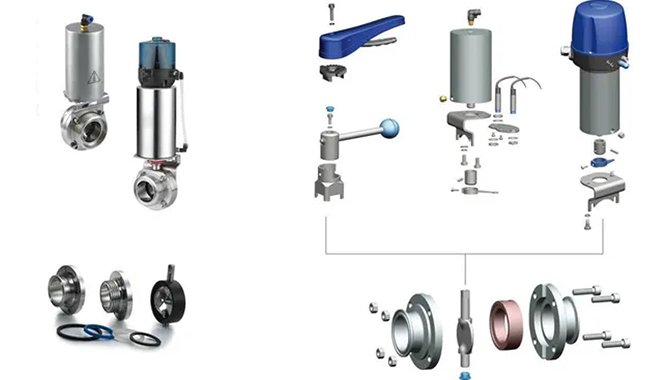
Actuator choice directly affects automation level and control precision.
| Actuator Type | Features | Applications |
|---|---|---|
| Manual handle | Low cost, simple operation, with position stop | Manual on/off, commissioning, infrequent operation |
| Pneumatic actuator | Fast switching, solenoid valve and position feedback options | CIP circuits, automated lines, remote control |
| Electric actuator | Precise position control, flow modulation, no air supply needed | Control valve applications, sites without compressed air |
| Pneumatic positioner | Continuous modulation, 4-20mA signal control | Processes requiring precise flow control (e.g., batching) |
6. Application Selection Quick Reference
| Application | Recommended Valve Type | Recommended Seat | Recommended Actuator |
|---|---|---|---|
| CIP return/supply switching | Concentric, SS304 | EPDM | Pneumatic |
| Dairy line on/off | Concentric, SS316L | EPDM | Pneumatic or manual |
| Beer fermenter fill/drain | Concentric, SS316L | EPDM | Pneumatic |
| Aseptic filling line | Double‑offset, SS316L electropolished | PTFE or EPDM | Pneumatic with position feedback |
| Strong acid/alkali transfer | Concentric, SS316L | PTFE | Pneumatic or electric |
| Powder/granule transfer | Double‑offset, wear‑resistant design | PTFE (wear‑resistant) | Pneumatic |
| Pharmaceutical WFI | Double‑offset, SS316L electropolished | PTFE | Pneumatic or electric |
| Frozen food line (low temp) | Concentric, SS304 | Silicone | Pneumatic or manual |
7. Common Selection Mistakes
❌ “All sanitary butterfly valves are the same”
The performance difference between concentric and double‑offset designs is huge. Double‑offset can extend valve life by 3–5 times.
❌ “PTFE seats are always best”
PTFE has excellent chemical resistance but lower elasticity than EPDM. For hot water and steam applications, EPDM is often the better choice.
❌ “Butterfly valves are not suitable for high‑viscosity media”
On the contrary, the concentric design is excellent for yoghurt, jam, purees and other high‑viscosity media because the disc creates virtually no flow obstruction when open.
❌ “Actuator type doesn’t matter”
In automated lines, actuator response speed, control precision and feedback signal type must match the control system.
8. Why Choose Engineering Plumbing as Your Sanitary Butterfly Valve Supplier?
At Engineering Plumbing, we provide complete sanitary butterfly valve solutions for food, pharma and biotech industries:
Material options: SS304 / SS316L with full material test reports (MTRs)
Construction types: Concentric, double‑offset, 1/2″ to 12″
Seat materials: EPDM, PTFE, silicone, FKM – all FDA 21 CFR compliant
Surface finish: Mirror polish (Ra ≤ 0.8 μm), electropolish available to Ra ≤ 0.4 μm
End connections: Tri‑clamp, butt weld, threaded, flanged
Actuators: Manual, pneumatic (single/double acting), electric – with solenoid valves, limit switches, positioners
Quality assurance: 100% pressure test + leak detection + passivation
Certification support: 3‑A and EHEDG compliance documentation available
📞 Butterfly Valve Selection Consultation
Send your process parameters (media type, temperature, pressure, pipe size, switching frequency, modulation requirement) to our engineering team. We will reply with technical recommendations and CAD drawings within 48 hours.
Frequently Asked Questions (FAQ)
1. Can sanitary butterfly valves be used in CIP systems?
Yes. Unlike ball valves, butterfly valves have no cavity dead spaces and are suitable for CIP (clean‑in‑place). This is a key reason for their widespread use in food and pharma.
2. How large is the lifespan difference between concentric and double‑offset butterfly valves?
With frequent cycling (dozens of times per day), a concentric valve seat typically lasts 2–3 years, while a double‑offset seat can last more than 10 years.
3. Can butterfly valves be used for flow modulation?
Yes. With a pneumatic positioner or electric actuator, butterfly valves can achieve precise position control for flow modulation. Note that the characteristic curve is equal‑percentage, which requires proper control system setup.
4. How to choose between EPDM and PTFE seats?
EPDM – Excellent for hot water, steam and alkaline CIP; good elasticity and sealing. Preferred for dairy and CIP circuits.
PTFE – Excellent for strong acids, alkalis and solvents; high temperature resistance. Preferred for chemical transfer and high‑temperature processes.
5. Why is surface finish important for sanitary butterfly valves?
Smoother surfaces make it harder for microorganisms to attach and form biofilms. Ra ≤ 0.8 μm is the common hygienic standard required by 3‑A and EHEDG, ensuring thorough cleaning and no biofilm residue.
6. Can butterfly valves handle particle‑containing media?
Yes. The concentric design creates virtually no flow obstruction when open, making it excellent for fruit pulp, yoghurt, slurries and other viscous particle‑containing media. Wear‑resistant seat materials (e.g., PTFE) are recommended.
7. Can you supply 3‑A certified sanitary butterfly valves?
Yes. Our sanitary butterfly valves support 3‑A and EHEDG certification, with complete FDA 21 CFR seat material compliance documents and material test reports (MTRs).


