


Sanitary System Commissioning & Startup Guide
In the food, pharmaceutical, biotech and water treatment industries, after sanitary piping system installation is complete, system commissioning and startup is the critical phase that verifies whether the system meets design requirements and hygienic standards. Commissioning is not simply “turning it on” – it is a complete process encompassing system flushing, equipment single‑machine testing, integrated testing, disinfection validation and documentation.
A system that has not been adequately commissioned may suffer from cleaning dead legs, leaks, microbial contamination or even batch failures after startup. This guide provides engineers with a complete framework covering pre‑commissioning preparation, system flushing, equipment single‑machine testing, integrated commissioning, disinfection validation, and documentation.
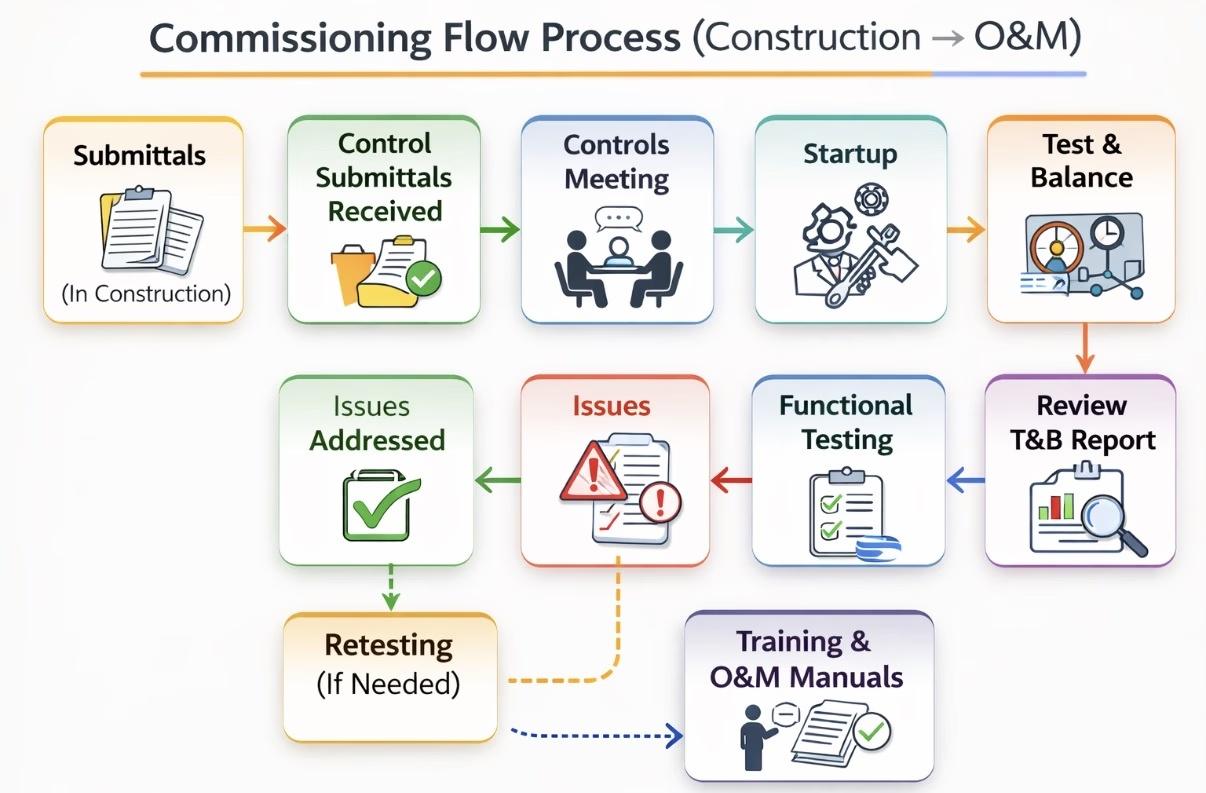
1. Pre‑Commissioning Preparation
Commissioning does not begin the moment installation is complete – its success depends largely on the thoroughness of preparation.
1.1 Prerequisite Confirmation
Before starting commissioning, confirm that the following conditions are met:
| Check Item | Requirement | Note |
|---|---|---|
| System installation completeness | All piping, valves, equipment installed | Passed installation inspection |
| Site cleanliness | Construction site cleaned | Doors/windows complete, area sealable |
| Utilities | Water, power, steam, compressed air available | Meet commissioning requirements |
| Instruments | Pressure gauges, thermometers, flow meters ready | Calibrated and within validity period |
| Commissioning plan | Prepared and approved | Includes safety and emergency measures |
| Personnel training | Commissioning team trained | Familiar with methods and procedures |
1.2 System Inspection
Before formal commissioning, perform a thorough visual and physical inspection of the system:
Piping system: Check all connections correct, clamps tight, welds visually acceptable
Valves: Confirm all valves in correct position, manual operation smooth
Pumps: Check lubrication, seals, motor wiring – confirm no leaks
Instruments: Check installation and calibration status of gauges, thermometers, flow meters
Tanks: Inspect internal cleanliness, confirm no debris
Drainage system: Confirm drainage piping complete and capable of handling flush flow
2. System Flushing
System flushing is the first step of commissioning, aimed at removing debris, weld slag, dust and other contaminants from piping and equipment. This is the most critical – and most overlooked – phase of sanitary system commissioning.
2.1 Flushing Preparation
| Preparation | Description |
|---|---|
| Calculate system volume | Based on pipe diameter and length, determine total system volume to size flush water quantity |
| Install temporary piping | Install temporary hoses or pipes at system inlet/outlet to direct flush water to drain |
| Remove sensitive components | Remove or isolate equipment that should not contact flush water (e.g., filter cartridges, sensitive instruments) |
| Confirm drainage capacity | Ensure drainage system can handle flush flow rate |
2.2 Flushing Methods
Depending on system type and cleanliness requirement, flushing can be classified into multiple levels:
| Flush Level | Applicable System | Flush Medium | Requirement |
|---|---|---|---|
| C‑1 | Non‑critical process lines | Process fluid itself | Flush until clear, no visible debris |
| C‑2 | General sanitary piping | Potable water | Flush 3× system volume, check strainer |
| C‑3 | Critical sanitary/pharma systems | Potable water + cleaning solution | Pre‑rinse → chemical clean → neutralise → final rinse |
| C‑6 | High‑purity water/WFI systems | Deionised or higher purity water | Flush 3× system volume, check strainer |
2.3 Flushing Velocity Requirements
Flushing effectiveness depends on sufficient water velocity to carry away metal particles and weld slag from the bottom of pipes.
| Flush Method | Minimum Velocity | Note |
|---|---|---|
| Water flushing | ≥ 3.0 m/s (~10 ft/s) | Sufficient to carry metal debris |
| Air blowing | ≥ 7.6 m/s (~25 ft/s) | For pipes that cannot tolerate water |
| Hot water flushing | ≥ 0.75 m/s or design velocity +10% | For removing flux residues |
✅ Rule of thumb: Flush water quantity should be at least 3× system volume. Install a 150μm strainer at the flush outlet and check for debris.
3. Equipment Single‑Machine Testing
After system flushing is complete, each piece of equipment should be tested individually to confirm normal function.
3.1 Pump Testing
| Step | Check Item | Acceptance Criteria |
|---|---|---|
| 1. Power check | Supply voltage, phase sequence | Matches nameplate requirements |
| 2. Jog start | Confirm motor rotation direction | Matches pump arrow direction |
| 3. No‑load run | Listen for abnormal noise, vibration | Smooth operation, no abnormal sounds |
| 4. Load run | Check flow, pressure, temperature | Flow ±10%, pressure ±10% |
| 5. Seal check | Mechanical seal or packing leakage | Drip rate meets manufacturer spec |
Duration: Recommend continuous operation for at least 2 hours.
3.2 Valve Testing
| Step | Check Item | Acceptance Criteria |
|---|---|---|
| 1. Manual operation | Valve opens/closes fully | Smooth operation, no binding |
| 2. Pneumatic/electric operation | Actuator strokes correctly | Position correct, feedback signal normal |
| 3. Sealing | Internal leakage when closed | Zero visible leakage (diaphragm) or per API 598 |
| 4. Position indication | Limit switches working | Control room display matches actual |
3.3 Instrument Calibration Verification
Confirm all pressure gauges, thermometers, flow meters are calibrated and within validity period
Compare field instrument readings with standard instrument – error within allowable range
Check control system signal transmission normal
4. Integrated System Testing
After individual equipment tests are passed, integrated system testing should be performed to verify the cooperative operation of the entire system under design conditions.
4.1 CIP System Commissioning
For systems equipped with CIP, perform CIP cycle commissioning and validation:
| Test Item | Content | Acceptance Criteria |
|---|---|---|
| CIP supply/return | Confirm pump flow and pressure | Meet design values |
| Cleaning temperature | Heater operation | Reaches setpoint (±2°C) |
| Cleaning concentration | Alkali/acid concentration | Meets cleaning protocol |
| Cycle time | Each phase duration correct | Matches CIP programme |
| Valve switching | Valves switch per programme | Correct switching, no cross‑flow |
| Return inspection | Discharge clear | Visually clear, no residue |
4.2 SIP System Commissioning
For systems equipped with SIP, perform steam sterilisation commissioning:
| Test Item | Content | Acceptance Criteria |
|---|---|---|
| Steam supply | Steam pressure and temperature | Meet design values |
| Heat‑up rate | Time from ambient to sterilisation temp | Matches SIP programme |
| Hold time | Duration at sterilisation temperature | Matches SIP programme |
| Temperature uniformity | Temperature variation across system | ≤ ±1°C |
| Condensate drainage | Steam trap operation | Condensate drained promptly |
| Cooling | Cooling rate and final temperature | Matches SIP programme |
4.3 Control System Validation
Verify all automatic valves operate per programme
Verify alarms and interlocks function (e.g., temperature, pressure limits)
Verify data logging functionality
5. Disinfection & Validation
After flushing and integrated testing are complete, drinking water systems, pharmaceutical water systems and food‑contact systems require disinfection to eliminate microbial contamination that may have been introduced during flushing and construction.
5.1 Disinfection Methods
| Method | Applicable System | Disinfectant | Contact Time |
|---|---|---|---|
| Chlorination | Drinking water, process water systems | Sodium hypochlorite (50-100 ppm) | 6-12 hours |
| Hot water disinfection | CIP systems, WFI systems | Hot water (80-85°C) | 30-60 minutes |
| Steam disinfection (SIP) | Aseptic process systems | Saturated steam (121°C) | 15-30 minutes |
| Hydrogen peroxide | Biopharma systems | Hydrogen peroxide (3-5%) | Per validation protocol |
5.2 Post‑Disinfection Flushing
After disinfection, the system must be flushed with drinking water or purified water until disinfectant residual meets standards:
| Parameter | Standard |
|---|---|
| Free chlorine residual | ≤ 1.2 mg/L (or consistent with supply) |
| pH | 6.5-8.5 |
| Turbidity | Clear, no visible residue |
5.3 Water Sampling & Testing
After disinfection and final flushing, water sampling and testing should be performed:
| Sampling Point | Test Item | Acceptance Criteria |
|---|---|---|
| Farthest point | Microbiological (total count) | Meets drinking water standard or process requirement |
| Return point | Residual chlorine | ≤ 1.2 mg/L |
| Each point‑of‑use | pH, turbidity | Meets design requirements |
| Tank outlet | Physical/chemical parameters | Meets process requirements |
⚠ Important: If microbiological testing fails, repeat disinfection and re‑sample. If the system is not immediately put into service after commissioning, flush weekly until formal handover.
6. Documentation & Record Requirements
Complete commissioning records are the foundation for system acceptance and future O&M. The following documents should be compiled and filed after commissioning:
| Document Type | Content |
|---|---|
| Commissioning plan | Approved plan (with safety measures) |
| System inspection record | Pre‑commissioning checklist (signed) |
| Flushing record | Date, medium, velocity, volume, strainer inspection results |
| Single‑machine test record | Operating parameters, duration, results for each equipment |
| Integrated test record | CIP/SIP parameters, temperature curves, pressure logs |
| Disinfection record | Disinfectant type, concentration, contact time, flushing log |
| Water quality test report | Microbiological and physical/chemical results |
| Instrument calibration certificates | All certificates (within validity period) |
| As‑built documentation | As‑built drawings, equipment manuals, operating instructions |
| Commissioning summary report | Signed acceptance conclusion |
7. Common Commissioning Problems & Solutions
| Problem | Possible Cause | Solution |
|---|---|---|
| Pump no flow after start | Not primed (centrifugal), inlet/outlet valves closed | Prime pump, check valve position |
| Excessive pump vibration | Misalignment, impeller imbalance | Realign, inspect impeller |
| Debris remains after flushing | Insufficient velocity, insufficient volume | Increase velocity and flush volume |
| Residue after CIP | Insufficient velocity, low concentration | Review CIP parameters, adjust velocity/concentration |
| SIP temperature below setpoint | Low steam pressure, clogged steam trap | Check steam supply, clean trap |
| Chlorine residual exceeds limit | Insufficient flushing | Increase flush volume, re‑test |
| Microbiological test fails | Inadequate disinfection, dead leg | Check dead legs, repeat disinfection |
| Valve leaking | Improper installation, damaged seal | Reinstall, replace seal |
8. Why Choose Engineering Plumbing for Commissioning Services?
At Engineering Plumbing, we provide professional sanitary system commissioning and startup services:
Commissioning plan development: Custom plans based on system type and hygienic standards (including safety and emergency measures)
System flushing services: C‑2 through C‑6 level flushing and chemical cleaning
Equipment commissioning: Single‑machine and integrated testing for pumps, valves, instruments, CIP/SIP systems
Disinfection validation: Design and validation of chlorination, hot water and steam disinfection procedures
Water quality testing: Post‑disinfection sampling and third‑party laboratory testing
Complete documentation: Commissioning records, flushing logs, disinfection reports, water quality reports, as‑built documentation
📞 Commissioning & Startup Consultation
Send your system drawings and commissioning requirements to our engineering team. We will return a commissioning plan and quotation within 48 hours.
Frequently Asked Questions (FAQ)
1. How long does system flushing take?
Depending on system size and contamination level, typically several hours to a few days. The key criterion is that outlet water is clear and strainer shows no debris. Recommended flush volume is at least 3× system volume.
2. Why is flushing velocity important?
When flushing velocity is insufficient, heavy particles like metal debris and weld slag at the bottom of pipes cannot be carried away. The minimum water flushing velocity is 3.0 m/s – sufficient to carry metal debris.
3. Does every system need disinfection?
No. Only systems used for drinking water, pharmaceutical water and food contact require disinfection. Non‑product contact systems (e.g., closed cooling water, compressed air) typically only need flushing.
4. What disinfectant should be used?
Drinking water systems commonly use sodium hypochlorite (household bleach) at 50-100 ppm for 6-12 hours. Pharmaceutical systems commonly use hot water (80-85°C) or pure steam (121°C) . Always check compatibility with system materials.
5. What should be validated during CIP system commissioning?
CIP system commissioning validation includes: supply/return pump flow and pressure, cleaning temperature, alkali/acid concentration, cycle times, valve switching, and return clarity.
6. How long should commissioning documents be kept?
Recommend at least equipment life + 5 years, or per cGMP requirements. For pharmaceutical systems, commissioning records are a critical part of the validation documentation package.
7. What if the system is not immediately put into service after commissioning?
If the system is not immediately put into service after commissioning, flush weekly and maintain the system filled with water under normal pressure until formal handover.
8. What are the key safety considerations for commissioning?
Key safety risks include: high‑pressure water/steam jet, chemical exposure (disinfectants), burns (hot water/SIP), and electrical safety. The commissioning plan must include safety and emergency measures. All personnel must wear PPE (goggles, gloves, protective clothing).


