


Valve in Petrochemical Applications: Refining and Chemical Plant Valve Configuration
The petrochemical industry is one of the largest consumers of industrial valves, accounting for approximately 37% of the global valve market. In refining and chemical plants, valves are subjected to some of the most demanding conditions in industrial processing: high temperatures, high pressures, corrosive media, erosive slurries, and cyclic operation. The failure of a single critical valve can result in production downtime, safety incidents, or environmental damage.
This guide provides engineers with a comprehensive overview of valve selection, configuration, and application considerations for petrochemical facilities—from upstream refining units to downstream chemical processing plants.
Sanitary Ball Valve
1. Petrochemical Processing Units and Valve Requirements
1.1 Crude Oil Distillation (Atmospheric and Vacuum)
Crude distillation is the first processing step in a refinery, separating crude oil into fractions based on boiling point.
| Valve Requirement | Specification | Reason |
|---|---|---|
| Temperature | Up to 400°C | High-temperature hydrocarbon vapours |
| Pressure | Atmospheric to moderate | Distillation column pressures |
| Media | Crude oil, fractions, sour water | Corrosive, contains H₂S |
| Key valve types | Gate valves, globe valves, check valves | Isolation, throttling, backflow prevention |
| Body material | Carbon steel (WCB) or chrome-moly (WC6/WC9) | Temperature capability |
| Trim material | 13Cr or 316 SS | Resistance to erosion and H₂S |
Valve configuration considerations:
Gate valves are used for isolation on column feed and product lines
Globe valves are used for level control and bypass throttling
Check valves are essential on pump discharge lines to prevent backflow
1.2 Fluid Catalytic Cracking (FCC)
The FCC unit converts heavy gas oil into lighter, more valuable products such as gasoline and propylene.
| Valve Requirement | Specification | Reason |
|---|---|---|
| Temperature | 500-700°C | High-temperature catalytic reaction |
| Media | Hydrocarbon vapours, catalyst fines | Erosive, high-temperature |
| Key valve types | Slide valves, butterfly valves, plug valves | Flow control, isolation |
| Body material | Alloy steel, stainless steel | High-temperature strength |
| Trim material | Stellite, ceramic-coated | Erosion resistance |
Critical valves:
Slide valves: Control catalyst circulation between the reactor and regenerator—these are the most critical valves in an FCC unit
Butterfly valves: Used for flue gas and air lines
Plug valves: Used for catalyst slurry services
1.3 Hydrotreating and Hydrocracking
These units remove impurities (sulphur, nitrogen, metals) and break down heavy molecules in the presence of hydrogen and catalyst.
| Valve Requirement | Specification | Reason |
|---|---|---|
| Temperature | 300-450°C | High-temperature reaction |
| Pressure | Up to 200 bar | High-pressure hydrogen |
| Media | Hydrogen, hydrogen sulphide, hydrocarbons | Toxic, explosive |
| Key valve types | Ball valves, gate valves, globe valves, check valves | Isolation, throttling |
| Body material | Carbon steel, alloy steel | High-pressure strength |
| Trim material | 316 SS, Stellite, tungsten carbide | H₂S resistance, erosion |
Key selection points:
High-pressure hydrogen service requires fire-safe design (API 607 or API 6FA)
Hydrogen embrittlement is a concern—select materials with appropriate hardness limits
Floating ball valves are commonly used up to 8 inches; trunnion-mounted ball valves are used for larger diameters and higher pressures
1.4 Catalytic Reforming
Reforming units upgrade low-octane naphtha into high-octane reformate for gasoline blending and produce hydrogen.
| Valve Requirement | Specification | Reason |
|---|---|---|
| Temperature | 450-550°C | High-temperature reaction |
| Pressure | Moderate to high | Hydrogen environment |
| Media | Hydrogen, hydrocarbons | Explosive, high-temperature |
| Key valve types | Ball valves, gate valves, globe valves | Isolation, throttling |
| Body material | Chrome-moly (WC6/WC9) | High-temperature service |
| Trim material | 316 SS, Stellite | Hardness, temperature |
1.5 Chemical Processing Units
Downstream chemical plants produce a wide range of products including polymers, solvents, acids, and intermediates.
| Valve Requirement | Specification | Reason |
|---|---|---|
| Temperature | -50 to 400°C | Wide range |
| Media | Acids, solvents, monomers, polymers | Corrosive, sticky, polymerising |
| Key valve types | Ball valves, plug valves, diaphragm valves, butterfly valves | Versatile applications |
| Body material | Stainless steel, alloy 20, Hastelloy, PTFE-lined | Chemical compatibility |
| Trim material | PTFE, PEEK, Stellite | Chemical and wear resistance |
2. Valve Type Application Matrix for Petrochemical Service
| Unit Operation | Isolation (On/Off) | Throttling | Flow Diversion | Overpressure Protection |
|---|---|---|---|---|
| Crude distillation | Gate, ball | Globe | Plug | Safety valve |
| FCC | Slide, plug, butterfly | Slide, globe | Plug | Safety valve |
| Hydrotreating | Ball (fire-safe), gate | Globe | Ball (multi-port) | Safety valve |
| Reforming | Ball (fire-safe), gate | Globe | Ball | Safety valve |
| Chemical | Ball, diaphragm | Globe, control valve | Multi-port ball, plug | Safety/relief valve |
3. Material Selection for Petrochemical Valves
3.1 Body Materials
| Material | ASTM Spec | Temperature Range | Applications |
|---|---|---|---|
| Carbon steel | A216 WCB | -29 to 425°C | General hydrocarbon service, moderate temperature |
| Chrome-moly | A217 WC6/WC9 | -29 to 650°C | High-temperature steam, H₂ service |
| Stainless steel | A351 CF8/CF8M | -196 to 800°C | Corrosive service, H₂S, chlorides |
| Alloy 20 | A351 CN7M | -29 to 425°C | Sulphuric acid, phosphoric acid |
| Hastelloy | C-276 | Cryogenic to 540°C | Severe corrosive service, chlorides |
| Duplex | 2205 | -40 to 315°C | Chloride service, sour gas |
3.2 Trim Materials
| Trim Material | Hardness | Temperature Limit | Applications |
|---|---|---|---|
| 13Cr stainless steel | RC 22-30 | Up to 540°C | General hydrocarbon, steam |
| 316 stainless steel | RB 80-85 | Up to 540°C | Mild corrosive service |
| Stellite overlay | RC 38-48 | Up to 650°C | High-temperature, erosive |
| Tungsten carbide | RC 65-70 | Up to 500°C | Highly erosive, slurry |
| PTFE seats | — | Up to 232°C | Clean fluids, bubble-tight sealing |
Critical service note: For sour service (H₂S-containing media), materials must meet NACE MR0175/ISO 15156 requirements to prevent sulphide stress cracking (SSC).
4. Special Valve Considerations for Petrochemical Service
4.1 Fire-Safe Design
Fire-safe valves are essential for flammable hydrocarbon services. The valve maintains sealing integrity during and after a fire.
| Fire-Safe Feature | Function |
|---|---|
| Anti-static devices | Prevent static charge accumulation |
| Fire-safe seats | Primary soft seat melts, secondary metal-to-metal seal engages |
| Spill-proof stem | Prevents stem leakage during fire |
| Body/cover joint design | Maintains pressure containment in fire |
Applicable standards: API 607, API 6FA
4.2 Cavity Pressure Relief
In liquid hydrocarbon services, trapped fluid in the ball cavity can expand due to temperature rise, causing dangerous pressure build-up.
| Design Feature | Function |
|---|---|
| Self-relieving seat | Seat design allows pressure to vent when cavity pressure exceeds body pressure |
| External relief valve | Dedicated pressure relief connected to cavity |
| Cavity vent | Connection point for pressure monitoring and relief |
4.3 Double Block and Bleed (DBB)
DBB capability provides positive isolation by sealing at both upstream and downstream seats.
| Feature | Benefit |
|---|---|
| Two independent sealing surfaces | Redundant isolation |
| Bleed connection | Allows checking for leakage between seals |
| Safety | Ensures isolation even if one seal fails |
4.4 Low Temperature / Cryogenic Service
| Design Feature | Purpose |
|---|---|
| Extended bonnet | Protects packing from cryogenic temperatures |
| Special materials | Impact-tested materials (e.g., LCB/LCC for -46°C) |
| Cavity pressure relief | Prevents pressure build-up from liquid expansion |
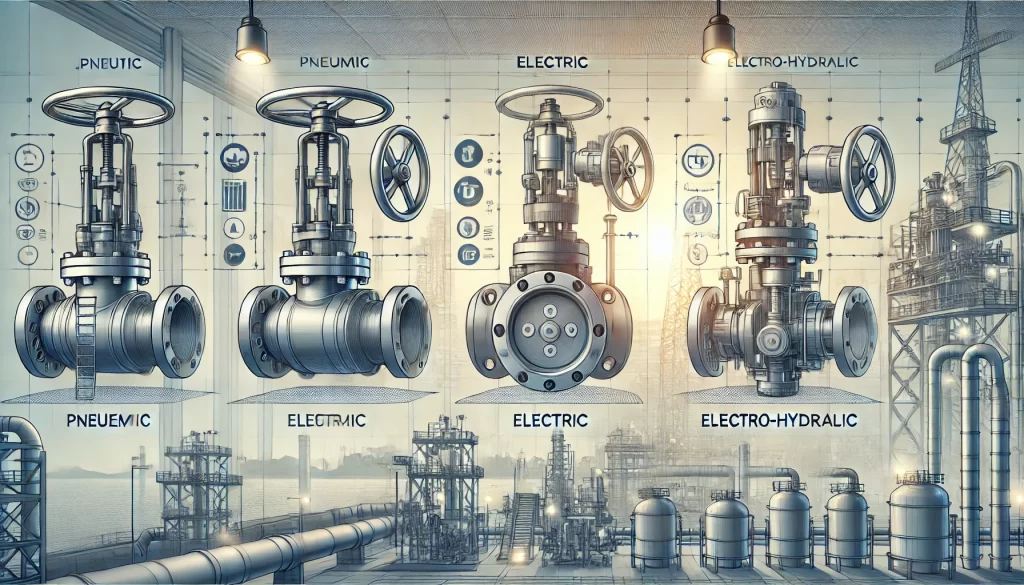
5. Valve Actuation in Petrochemical Plants
5.1 Actuator Type Selection
| Application | Recommended Actuator | Reason |
|---|---|---|
| Remote isolation | Pneumatic (spring-return) | Fire-safe, fails to predetermined position |
| Critical on/off service | Pneumatic (double-acting) | Fast response, high torque |
| Control loop | Pneumatic with positioner or Electric | Precise throttling control |
| Fire-safe ESD valves | Pneumatic (spring-return) | Fails to safe position on air/fire loss |
5.2 ESD (Emergency Shutdown) Valve Requirements
| Requirement | Specification |
|---|---|
| Actuator type | Single-acting pneumatic (spring-return) |
| Fail position | Fail closed (FC) or fail open (FO) per P&ID |
| Response time | Typically ≤10 seconds |
| Partial stroke testing | Required by many operators |
| Position feedback | Limit switches and position transmitters |
| Redundant solenoids | For critical services |
6. Standards and Specifications
| Standard | Scope |
|---|---|
| API 600 | Steel gate valves for petroleum and natural gas |
| API 6D | Pipeline valves (ball, gate, plug, check) |
| API 608 | Metal ball valves |
| API 598 | Valve inspection and testing |
| API 607 / API 6FA | Fire-safe testing |
| API 594 | Check valves (wafer, lug, double flange) |
| ASME B16.34 | Valve pressure-temperature ratings |
| ASME B16.5/B16.47 | Flange connections |
| NACE MR0175/ISO 15156 | Materials for sour service |
| ISO 17292 | Metal ball valves for petroleum and petrochemical |
7. Valve Inspection and Maintenance for Petrochemical Plants
| Inspection/Maintenance Activity | Frequency | Scope |
|---|---|---|
| Leak detection | Continuous/Weekly | External leakage monitoring |
| Partial stroke testing (PST) | Monthly/Quarterly | ESD valve integrity |
| Seat leakage testing | Annually or per run length | Internal leakage detection |
| Full stroke testing | Per shutdown | Full valve function verification |
| Packing inspection | Annually | Stem seal integrity |
| Body thickness measurement | Per shutdown | Corrosion/erosion monitoring |
| Actuator servicing | Annually | Lubrication, seal replacement |
Refinery turnarounds (typically every 3-5 years) provide the primary opportunity for comprehensive valve inspection, overhaul, and replacement of critical service valves.
8. Related Products in Petrochemical Applications
Sanitary Ball Valve technology, while originally developed for food and pharmaceutical industries, has found important applications in petrochemical processes requiring high purity and low contamination:
| Application | Sanitary Ball Valve Role | Connection Type |
|---|---|---|
| High-purity chemical transfer | Ultra-clean fluid isolation | Tri-Clamp or welded |
| Corrosive fluid handling | Chemical-resistant sealing (PTFE/TFM seats) | Flanged or Tri-Clamp |
| Low-pressure gas systems | Clean gas isolation | Tri-Clamp or threaded |
| Lab and pilot plant | Small-bore, high-purity flow control | Tri-Clamp |
The same principles that make Sanitary Ball Valve products ideal for food and pharma—full-bore design for zero pressure drop, 316L stainless steel construction for corrosion resistance, and CIP/SIP compatibility—are increasingly valued in petrochemical applications where product purity and cleanability are critical, such as specialty chemical and high-purity intermediate manufacturing.
9. Common Petrochemical Valve Selection Mistakes
| Mistake | Correct Practice |
|---|---|
| Ignoring H₂S service requirements | Verify NACE MR0175/ISO 15156 compliance for sour service |
| Using soft seats above temperature limit | Select metal seats or graphite-packed designs for high temperature |
| Not considering fire-safe requirements for flammable services | Specify API 607 or API 6FA fire-safe design |
| Overlooking hydrogen embrittlement | Limit material hardness per NACE requirements |
| Using carbon steel in corrosive applications | Select appropriate stainless steel or alloy |
| Not verifying actuator sizing for ESD valves | Ensure ESD valves close within required time; test response time |
| Ignoring cavity pressure relief in liquid service | Specify self-relieving seats or external relief for trapped liquids |
10. Series Navigation
← Previous article: Industrial Valve Installation & Maintenance Guide: Installation Standards, Fault Diagnosis, and Maintenance Strategies
→ Next article: Valve in Power Generation Applications: High-Temperature, High-Pressure Steam and Cooling Water Systems


