


Valve in Water Treatment Applications: Large-Diameter Isolation and Chemical Dosing Systems
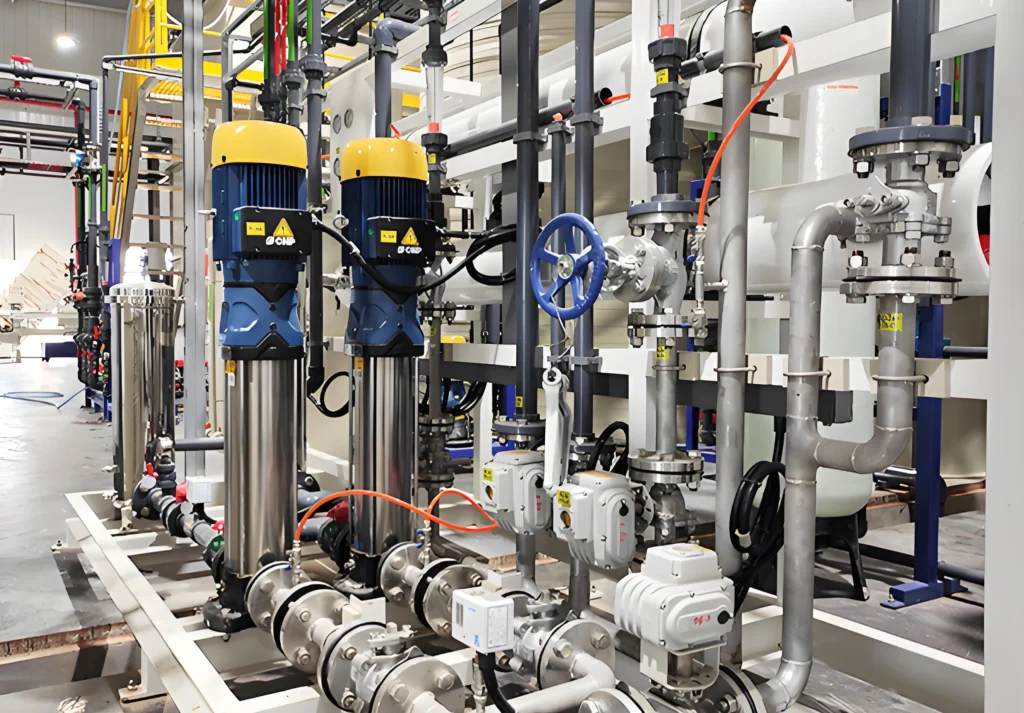
The water treatment industry is the third largest consumer of industrial valves, encompassing municipal water supply, wastewater treatment, seawater desalination, and water reuse markets. Valve applications in water treatment systems have distinct characteristics: large diameters, high quantities, and complex operating conditions—from massive flow conveyance in raw water intake, to precise metering in chemical dosing rooms, to wear-resistant requirements in sludge handling. Different processes impose vastly different selection requirements on valves.
This guide provides engineers and O&M personnel in the water treatment industry with a systematic reference for valve selection, covering valve type selection, material requirements, and special considerations for various process stages in water and wastewater treatment plants.
1. Water Treatment Industry Operating Conditions and Valve Requirements
1.1 Classification of Water Treatment Systems and Demand Differences
The water treatment industry can be divided into three main application areas, each with different valve requirements:
| Application Area | Media Characteristics | Core Requirements | Key Certifications |
|---|---|---|---|
| Drinking water systems | Clean water, low corrosivity | Material safety, corrosion resistance, low leakage | NSF 61, AWWA standards |
| Wastewater treatment | Solids, sludge, slurries, chemicals | Clog resistance, abrasion resistance, corrosion resistance | Industry general |
| Fire protection systems | Clean water, high temp/pressure | Fast operation, high reliability | UL/FM certified |
1.2 Core Valve Selection Principles for Water Treatment
Based on industry practice, water treatment valve selection should follow these steps:
Define purpose: Determine whether the valve is for isolation, regulation, or check function
Confirm operating conditions: Media properties, working pressure, working temperature
Determine connection type: Flanged, threaded, welded, or tri‑clamp
Select operation mode: Manual, electric, pneumatic, or hydraulic
Determine materials: Select body and seal materials based on media corrosivity and solids content
2. Valve Selection for Wastewater Treatment Systems
Wastewater treatment systems are characterised by media containing solid particles, fibres, sludge, and chemicals, placing high demands on valves for clog resistance, abrasion resistance, and corrosion resistance.
2.1 Butterfly Valve – The Workhorse of Wastewater Treatment
Butterfly valves are widely used in wastewater treatment, offering simple construction, light weight, and compact footprint, suitable for large-diameter pipelines and flow regulation.
| Selection Point | Description |
|---|---|
| Applications | Large-diameter pipelines, large-flow regulation, fast isolation |
| Size range | DN50-DN3000 |
| Recommended type | Soft-seated concentric or double-offset |
| Body material | Ductile iron (QT450-10) |
| Disc material | Ductile iron or stainless steel |
| Seal material | EPDM or NBR |
Water plant practice: In water treatment plant filter beds, concentric butterfly valves are widely used as filter outlet control valves, backwash control valves, and air scour control valves, with pneumatic or electric actuation.
2.2 Knife Gate Valve – The Specialised Valve for Sludge Handling
Knife gate valves are specialised valves for handling sludge, slurries, and abrasive media in wastewater treatment.
| Feature | Description |
|---|---|
| Working principle | Thin blade-shaped gate moves up and down, capable of cutting through solids in the media |
| Core advantages | Clog resistance, abrasion resistance, low flow resistance |
| Material selection | 304 or 316L stainless steel (corrosion resistance); PTFE soft seal or metal hard seal |
| Typical applications | Sludge thickening tanks, dewatering press feed lines, chemical dosing lines |
Knife gate valve advantage: During opening and closing, the gate quickly cuts through the media, reducing sludge adhesion; its large bore design provides low flow resistance, effectively preventing sludge clogging.
2.3 Ball Valve Applications in Wastewater Treatment
Ball valves are used for on/off control in wastewater pipelines. Their smooth internal cavity and resistance to debris accumulation make them suitable for wastewater containing solid particles.
| Advantage | Description |
|---|---|
| Sealing performance | Excellent—maintains leak-tightness even under high pressure |
| Fast operation | Suitable for frequent cycling applications |
| Smooth cavity | Resists debris accumulation |
| Applications | Wastewater pipelines containing solid particles |
2.4 Check Valve – Critical Protection at Pump Discharges
Check valves are essential valves at pump discharges to prevent media backflow.
| Selection Point | Description |
|---|---|
| Primary function | Prevent media backflow, protect pumps and pipelines |
| Common types at pump discharge | Slow-closing butterfly check valve, swing check valve |
| Slow-closing butterfly check valve features | Compact (1/4 to 1/20 of traditional valves), low flow resistance, stable sealing, eliminates water hammer |
| Applicable media | Clean water, wastewater, seawater |
Slow-closing check valve function: The slow-closing butterfly check valve first closes most of its stroke rapidly, then slowly closes the remaining 5-10% of opening, effectively eliminating destructive water hammer and protecting pipeline and pump safety.
3. Valve Selection for Drinking Water Treatment Systems
Drinking water systems have strict requirements for material safety and corrosion resistance. Valves in contact with drinking water must comply with NSF 61 certification—the National Sanitation Foundation's standard for drinking water contact materials, and a requirement of the American Water Works Association for distribution valves.
3.1 Butterfly Valve – Standard Configuration in Water Plants
Butterfly valves are extensively used in drinking water treatment plants, offering simple construction, low flow resistance, fast operation, and compact size, capable of both isolation and flow regulation.
| Selection Point | Description |
|---|---|
| Sealing requirement | For zero leakage, soft-seated single or double-offset butterfly valves are recommended |
| Connection | Should be used with expansion joints to ensure system safety |
| Corrosion protection | Internal and external epoxy coating, thickness ≥250μm |
| Drinking water certification | Coating must comply with GB/T 17219 |
3.2 Gate Valve – Reliable Isolation Valve
Gate valves are widely used for isolation control in drinking water systems. Their very low flow resistance when fully open makes them ideal for pipelines requiring minimal pressure drop.
| Selection Point | Description |
|---|---|
| Recommended type | Resilient-seated gate valve (zero leakage sealing) |
| Gate | Fully encapsulated with high-elasticity rubber |
| Stem nut | Bronze with good wear resistance |
| Sealing structure | O-ring rubber seal |
| Operation note | Gate valves should not be used for flow regulation (subject to erosion when partially open) |
Rising vs non-rising stem: Drinking water systems commonly use rising stem (OS&Y) gate valves, allowing visual indication of valve position; non-rising stem valves are used where space is limited.
3.3 Air Release Valve – Pipeline Protection Device
Air release valves are often overlooked but critical valve types in water treatment pipeline systems, used for releasing trapped air, preventing air pockets, and preventing vacuum collapse.
| Selection Point | Description |
|---|---|
| Primary function | Releases air during pipeline filling to prevent air pockets; admits air during pipeline draining to prevent vacuum collapse |
| Applications | Pipeline high points, long-distance transmission mains, pump station discharges |
| Type selection | Combination air release valve (with both large-orifice and small-orifice air release functions) is the most common type |
4. Valve Selection for Dosing and Chemical Treatment Systems
Dosing systems involve precise injection of coagulants, disinfectants, acids, and alkalis, placing extremely high demands on valves for corrosion resistance, precise control, and sealing integrity.
4.1 Diaphragm Valve – Preferred for Corrosive Media
The diaphragm valve's isolation of the body from the bonnet by the diaphragm makes it ideal for conveying corrosive and particle-containing media.
| Advantage | Description |
|---|---|
| Isolation design | Media does not contact stem, packing, or other components |
| Corrosion resistance | Suitable for acids, alkalis, and other corrosive media |
| Clog resistance | Suitable for wastewater containing particles and suspended solids |
| Sealing performance | Good |
4.2 Stainless Steel Knife Gate Valve – Reliable Choice for Dosing Lines
In raw water purification dosing lines, some chemicals have strong corrosivity (such as chlorine gas, sulphuric acid) and may contain particulate impurities.
| Selection Point | Description |
|---|---|
| Material selection | 316L stainless steel for highly corrosive chemicals |
| Seal material | PTFE soft seal or metal hard seal |
| Core advantages | Corrosion resistance, abrasion resistance, fast operation |
| Applications | Dosing rooms, pretreatment pipelines, disinfectant injection |
4.3 Control Valves in Low-Flow Dosing Applications
Dosing systems typically involve low-flow, high-precision flow control, requiring valve types with good throttling performance.
| Recommended Type | Applications |
|---|---|
| Needle valve | Extremely low flow, high-precision dosing |
| V-port ball valve | Flow regulation for particle-containing chemicals |
| Diaphragm valve | Flow control for corrosive chemicals |
5. Material Requirements for Water Treatment Valves
5.1 Drinking Water System Material Requirements
| Requirement | Specification |
|---|---|
| Drinking water contact materials | NSF 61 certified, AWWA compliant |
| Anti-corrosion coating | GB/T 17219 (China), coating thickness ≥250μm |
| Seal materials | EPDM, NBR (drinking water grade) |
| Metallic materials | Ductile iron QT450-10, stainless steel 304/316L |
5.2 Wastewater Treatment Material Requirements
| Media Type | Recommended Body Material | Recommended Seal Material |
|---|---|---|
| General wastewater | Ductile iron, cast steel | EPDM, NBR |
| Particle-containing/abrasive media | Stainless steel 304/316L | PTFE, metal-seated |
| Corrosive wastewater | Stainless steel 316L, lined valves | PTFE, FKM |
| Sludge/slurries | Stainless steel knife gate valves | PTFE, metal hard seal |
5.3 Material Selection Principles
Corrosive media → Stainless steel or special alloys
Solid particle-containing media → Wear-resistant materials (tungsten carbide, Stellite)
Drinking water contact → NSF 61 certified materials
High-temperature media → High-temperature seal materials (PTFE, graphite)
6. Sanitary Valve Applications in Water Treatment
In advanced drinking water treatment, seawater desalination pretreatment, ultrapure water systems and other processes, sanitary valves find applications due to their dead-leg-free design and cleanability:
| Application | Recommended Sanitary Valve | Key Requirements |
|---|---|---|
| Ultrafiltration/RO systems | Sanitary butterfly valve | Low pressure drop, CIP compatible |
| Membrane treatment units | Sanitary diaphragm valve | Dead-leg-free, sterilizable |
| Dosing systems | Sanitary ball valve | Chemical corrosion resistance, precise control |
Relation to sanitary product series: The water treatment industry's demands on valves are moving toward higher cleanliness and stricter leakage class requirements. In water plant membrane treatment rooms and purified water systems, the Sanitary Butterfly Valve's CIP-cleanable design and zero dead-leg construction align well with the high cleanliness requirements of RO membrane systems, and are increasingly recognised by water treatment engineers.
7. Series Navigation
← Previous article: Control Valve Selection Guide: Regulator Types, Flow Characteristics, and Sizing
→ Next article: Valve in Chemical Industry Applications: Corrosive Media and Special Alloy Selection


