


How to Choose the Right Material for Sanitary Piping System Fittings
In the food, pharmaceutical, and biotech industries, the material selection for sanitary fittings directly affects corrosion resistance, product purity, and regulatory compliance. Wrong material choices can lead to pitting corrosion, product contamination, and even entire batch rejections. This article systematically compares the performance of 304 stainless steel, 316L stainless steel, and special alloys, helping engineers and procurement professionals make informed material decisions.
1. Why Material Selection Matters
Sanitary fittings operate under demanding conditions: frequent CIP/SIP cycles, acidic or alkaline cleaning agents, high-temperature steam, and chloride-containing media. Once a material corrodes, surface roughness increases, creating crevices for microbial harborage, leading to biofilm formation and product contamination.
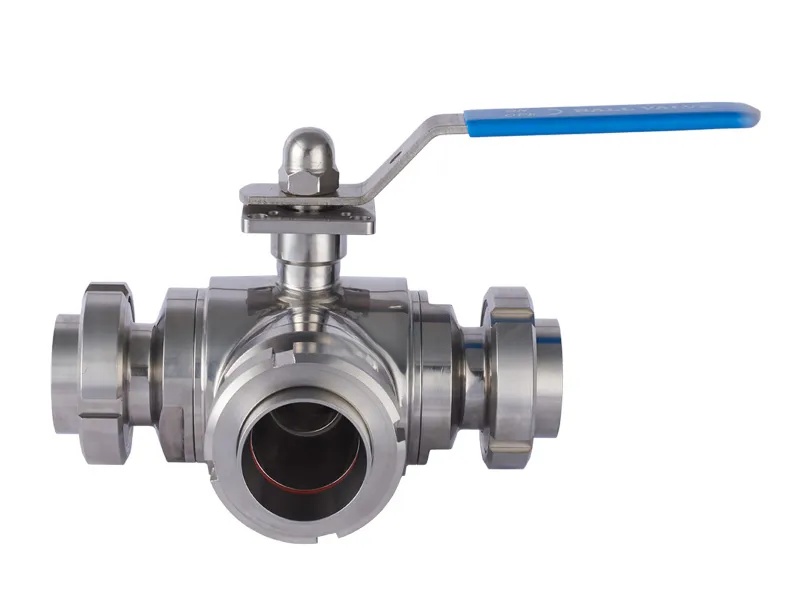
The core logic of material selection: Balancing corrosion resistance, surface retention capability, regulatory compliance, and cost.
2. 304 Stainless Steel – The Economical Entry-Level Choice
304 stainless steel (equivalent to S30408) is the most basic austenitic stainless steel, containing approximately 18% chromium and 8% nickel.
| Characteristic | Detail |
|---|---|
| Corrosion resistance | Good—suitable for neutral water and most food media |
| Chloride resistance | Limited (critical pitting temperature approx. 20-30°C) |
| Temperature range | -196°C ~ +800°C |
| Weldability | Good—risk of intergranular corrosion after welding |
| Relative cost | Baseline (1.0×) |
| Typical applications | Drinking water, general food processing, dairy (non-corrosive) |
Limitations: In chloride-containing environments (e.g., sodium hypochlorite used in CIP), the chromium oxide passive film on 304 can be easily destroyed by chloride ions, causing pitting corrosion. For long-term chloride exposure, 304 is not recommended.
3. 316L Stainless Steel – The Standard Choice for Sanitary Applications
316L stainless steel (equivalent to S31603) is the preferred material for sanitary systems, adding 2-3% molybdenum (Mo) to the 304 base.
| Characteristic | Detail |
|---|---|
| Corrosion resistance | Excellent—particularly resistant to chlorides and acidic media |
| Chloride resistance | Good (critical pitting temperature approx. 35-50°C) |
| Temperature range | -196°C ~ +800°C |
| Weldability | Excellent—"L" grade low carbon (≤0.03%) prevents intergranular corrosion after welding |
| Relative cost | Approx. 1.3-1.5× of 304 |
| Typical applications | Pharmaceutical WFI, biotech, chlorine-containing CIP, acidic foods |
Core advantages:
Molybdenum improves resistance to chlorides, sulphuric acid, phosphoric acid, and other media
Low carbon content eliminates the need for solution treatment after welding
Can be electropolished to Ra ≤ 0.4μm, suitable for aseptic processes
4. Special Alloys – Solutions for Extreme Conditions
When 316L is still insufficient to resist corrosion, special alloys are required.
| Material | Key Characteristics | Relative Cost | Typical Applications |
|---|---|---|---|
| Hastelloy C-276 | Resists strong oxidisers, wet chlorine, chlorides | 5-8× 316L | Hydrochloric acid, sulphuric acid, high-salt environments |
| Duplex 2205 | High strength, resists stress corrosion cracking | 2-3× 316L | Chlorinated high-temperature water, seawater |
| Titanium & alloys | Excellent chloride resistance, lightweight, biocompatible | 6-10× 316L | High-purity pharma, bromine/fluoride media |
When to choose special alloys:
High chloride concentration (e.g., seawater transfer, brine)
Process temperature >60°C with pH <4
Media containing bromides or fluorides
316L shows pitting in simulated service testing
5. Material Comparison Matrix
| Comparison Dimension | 304 | 316L | Duplex 2205 | Hastelloy C-276 |
|---|---|---|---|---|
| Chloride resistance | ★★ | ★★★★ | ★★★★★ | ★★★★★ |
| Acid resistance | ★★ | ★★★ | ★★★ | ★★★★★ |
| Alkali resistance | ★★★ | ★★★★ | ★★★★ | ★★★ |
| Post-weld corrosion resistance | ★★ | ★★★★ | ★★★★ | ★★★★★ |
| Surface finish retention | ★★★ | ★★★★★ | ★★★★ | ★★★★★ |
| Initial cost | ★★★★★ | ★★★ | ★★ | ★ |
| Total cost of ownership | ★★★ | ★★★★★ | ★★★ | ★★ |
6. Material Selection Decision Flowchart
Step 1: Does the media contain chlorides (Cl⁻)?
├── No → Select 304 Stainless Steel
└── Yes → Proceed to Step 2

Step 2: Chloride concentration > 300ppm? or Temperature > 60°C?
├── No → Select 316L Stainless Steel
└── Yes → Proceed to Step 3

Step 3: pH < 4 or Media contains bromides/fluorides?
├── No → Select Duplex 2205 Stainless Steel
└── Yes → Select Hastelloy or Titanium Alloy
7. Common Material Selection Mistakes and How to Avoid Them
| Mistake | Consequence | Correct Practice |
|---|---|---|
| Substituting 304 for 316L to save cost | Pitting corrosion, product contamination | Use 316L for chloride-containing environments |
| Ignoring "L" grade low carbon | Intergranular corrosion in weld heat-affected zones | WFI and pharmaceutical processes must use 316L |
| Relying solely on supplier's verbal material claims | Material mismatch, no traceability | Require MTRs and PMI test reports |
| Neglecting electropolishing | High surface roughness, biofilm growth | Specify electropolishing and Ra value for aseptic processes |


