


How to Select Sanitary Fittings for Food, Pharmaceutical, and Biotech Industries
In food, beverage, pharmaceutical, biotech, and cosmetic processing, sanitary fittings are the fundamental components that make up clean piping systems. They not only connect pipelines but also serve as critical barriers against contamination, ensuring product safety and regulatory compliance. Improperly selected fittings can become breeding grounds for microorganisms, leading to product contamination, batch failures, and even food safety incidents. This guide provides engineers and procurement professionals with a complete reference from selection to installation.
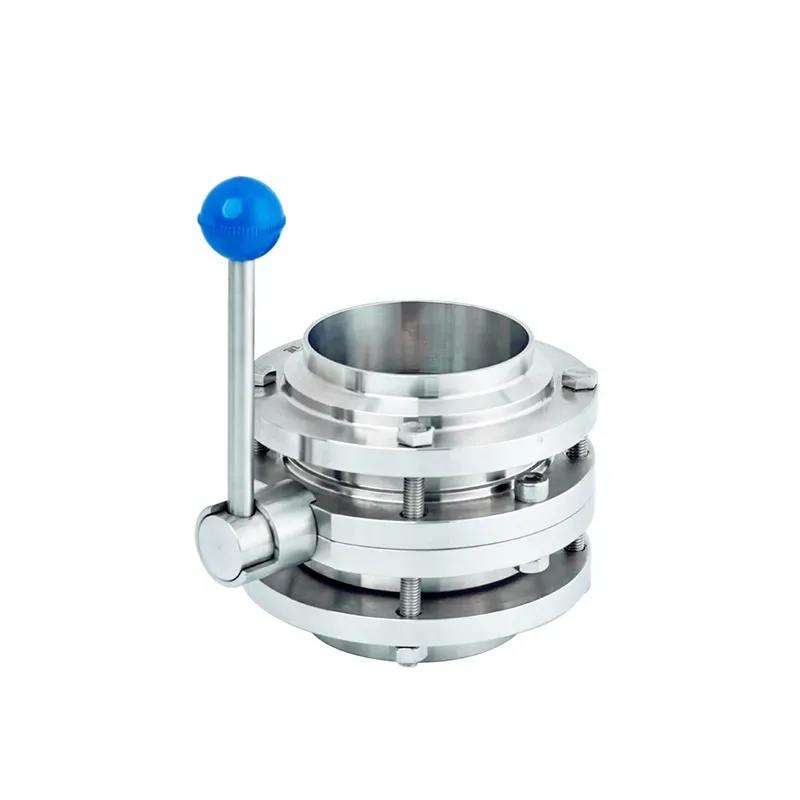
1. Sanitary Fittings Overview and Core Requirements
Sanitary fittings are pipeline connection components specifically designed for high-purity applications. The fundamental difference from standard industrial fittings is their design objective—cleanability as the top priority. This means all internal surfaces must be smooth, crevice-free, and fully drainable to eliminate risks of microbial harborage and product residue.
Core characteristics of sanitary fittings:
| Feature | Requirement |
|---|---|
| Material | 304 or 316L stainless steel—non-reactive, corrosion-resistant |
| Internal surface finish | Standard sanitary Ra ≤ 0.8μm; aseptic Ra ≤ 0.4μm (electropolished) |
| Construction | Dead-leg-free, self-draining, crevice-free |
| Compliance | 3-A, FDA, EHEDG, ASME BPE, etc. |
| Cleanability | CIP (Clean-in-Place) and SIP (Sterilisation-in-Place) compatible |
In high-risk food processing such as meat and poultry production, smooth internal surfaces and polished welds are the baseline requirements for "hygienic design"—any rough or pitted surface can become a microbial shelter.
2. Sanitary Fittings Classification
2.1 By Function
| Fitting Type | Function | Typical Use |
|---|---|---|
| Elbow | Changes pipeline direction (45°, 90°, etc.) | Pipeline turns and bends |
| Tee | Three-way connection; splits or combines flow | Branch lines, distribution headers |
| Reducer | Connects different pipe diameters | Pipe size transitions |
| Cap/Plug | Seals the end of a pipe | Temporary closures, spare ports |
| Union | Removable connection | Maintenance points, frequent disassembly locations |
| Clamp | Secures ferrules and gaskets | All Tri-Clamp connection systems |
2.2 By Connection Type
| Connection Type | Characteristics | Best Application |
|---|---|---|
| Tri-Clamp | Quick assembly/disassembly, tool-free, crevice-free | Pipelines requiring frequent CIP/SIP cleaning |
| Welded | Permanent connection, zero leakage, highest hygienic integrity | High-purity systems, WFI, permanent installations |
| Threaded | Simple installation, low cost | Auxiliary lines, low-pressure systems (less common in sanitary) |
Tri-Clamp is the most common connection method in sanitary systems, consisting of three parts: ferrule, gasket, and clamp. 1/2" and 3/4" sizes have the same outside diameter but different inside diameters to provide different flow rates—pay attention to sizing.
3. Material Selection Guide
3.1 Stainless Steel Materials
| Material | Characteristics | Recommended Application |
|---|---|---|
| 304 Stainless Steel | Good corrosion resistance, lower cost | General food and beverage processing |
| 316L Stainless Steel | Contains molybdenum; superior chloride resistance; low carbon prevents intergranular corrosion | Pharmaceutical, biotech, chlorine-containing CIP systems |
316L is the preferred material for sanitary applications. Its low carbon content (≤0.03%) prevents intergranular corrosion after welding, ensuring long-term durability. For extreme corrosive media, special alloys are available but at significantly higher cost.
3.2 Gasket Materials
Gaskets are critical for sealing in Tri-Clamp connections. Material selection directly affects sealing performance and media compatibility:
| Material | Temperature Range | Suitable Media | Not Suitable For |
|---|---|---|---|
| EPDM | -40°C ~ +150°C | Water, steam, alkaline CIP, food products | Oils, hydrocarbon solvents |
| Silicone | -60°C ~ +200°C | High-purity food, pharmaceutical, low extractables | Steam, strong acids, oils |
| PTFE | -200°C ~ +260°C | Strong acids, alkalis, extreme chemical environments | Strong alkalis at high temperature (creep) |
| FKM (Viton) | -23°C ~ +150°C | Oils, organic solvents, SIP/CIP compatible | Amines, ketones, live steam |
Selection rule: EPDM is most common for CIP/SIP cycles; choose FKM or PTFE for oil-containing media.
3.3 Surface Finish
| Grade | Ra Value | Application |
|---|---|---|
| Standard sanitary | ≤ 0.8μm | General food, beverage, dairy processing |
| High sanitary | ≤ 0.5μm | Premium food, cosmetics, high-purity water |
| Aseptic/Electropolished | ≤ 0.4μm | Pharmaceutical, biotech, WFI systems |
Electropolishing (EP) not only achieves lower Ra values but also forms a chromium-rich oxide layer on the surface, further enhancing corrosion resistance—making it the preferred finish for biopharmaceutical and aseptic processes.
4. Hygienic Standards and Certifications
Different industries and target markets have significantly different certification requirements:
| Certification/Standard | Applicable Scope | Core Requirement |
|---|---|---|
| 3-A Sanitary Standards | US food, dairy, pharmaceutical | Hygienic design, cleanability, minimises contamination risk |
| FDA 21 CFR | Food and drug contact materials | Safe materials, no harmful leachables |
| EHEDG | European food, pharmaceutical | Hygienic engineering design certification |
| ASME BPE | Biopharmaceutical | Surface finish, traceability, welding control, SF grade |
| USP Class VI | Pharmaceutical, biotech | Biocompatibility testing, sterility, leachables assessment |
In biopharmaceutical applications, ASME BPE is the most highly regarded standard; for food and dairy, 3‑A certification is essential.
5. Key Selection Criteria
5.1 Four-Step Selection Process
Step 1: Define application and process requirements
Media characteristics: Corrosive → 316L; high viscosity → full-port design
Temperature and pressure: Determine gasket material grade and pressure rating
Cleaning requirements: CIP/SIP required? Cleaning frequency?
Step 2: Confirm compliance standards
Determine required certifications based on target market and industry
Require suppliers to provide certification documents and MTRs
Step 3: Select material and surface treatment
Prefer 316L stainless steel (pharmaceutical, corrosive media)
Determine Ra value based on cleaning requirements
Step 4: Determine connection type
Frequent disassembly required → Tri-Clamp
Permanent high-purity systems → Welded
Auxiliary lines → Threaded (limited use in sanitary)
5.2 Common Selection Mistakes
| Mistake | Correct Practice |
|---|---|
| Selecting solely on price | Prioritise material certification and traceability; contamination cost far exceeds component price |
| Ignoring surface finish requirements | Specify Ra value, require roughness test reports |
| Mismatched gasket materials | Select based on media chemistry AND temperature, not just size |
| Not verifying dead-leg dimensions | Follow the 2D rule; eliminate fluid stagnation zones |
6. Dead Leg Prevention – The Core of Hygienic Design
A dead leg is the most hidden contamination risk in sanitary piping—stagnant fluid, microbial growth, CIP cannot reach. Industry guidance recommends the 2D rule (ASME BPE): the distance from the main pipe wall to the end of the branch should be less than twice the branch diameter.
Design strategies to reduce dead legs:
Use short-outlet tees with minimal branch length
Ensure pipelines can be fully drained in layout design, avoid low-point pooling
Ensure proper gasket alignment during installation to prevent gasket-induced crevices
7. Installation and Maintenance Best Practices
7.1 Tri-Clamp Connection Installation Tips
Install gasket correctly: Ensure the gasket is fully seated between the two ferrule faces
Tighten evenly: Hand-tighten only—over-tightening can damage flanges and gaskets; under-tightening may cause leakage or gaps
Regular inspection: Check flanges, gaskets, and clamps for wear, corrosion, or damage
7.2 Welded Connection Tips
Inert gas shielding (argon) must be used during welding to prevent internal surface oxidation
Weld internal surfaces should be smooth, continuous, and flush with the pipe wall
Borescope inspection should be performed after welding to verify weld quality
7.3 CIP/SIP Compatibility
Sanitary fittings should be designed to support CIP and SIP processes. Smooth internal bores and crevice-free construction ensure effective cleaning and sterilisation without disassembly. In high-throughput environments such as meat and poultry processing, fittings must withstand repeated temperature fluctuations, high-pressure washdowns, and strong chemical cleaning without degradation.
8. Summary and Action Recommendations
Sanitary fittings selection requires balancing material, surface finish, connection type, certifications, and cost.
Core action checklist:
Define process requirements: Media, temperature, pressure, cleaning frequency
Confirm certification requirements: 3-A, FDA, EHEDG, ASME BPE
Choose material: 316L for pharmaceutical/corrosive; 304 for general food
Specify surface finish: Standard Ra ≤ 0.8μm; aseptic Ra ≤ 0.4μm
Select connection type: Frequent cleaning → Tri-Clamp; permanent systems → Welded
Verify gasket compatibility: Based on media and temperature
Request documentation: MTRs, test reports, certification documents
Validate samples: Before bulk procurement, verify dimensions, finish, and sealing performance


