


Sanitary Pipe Fittings: Complete Guide to Types, Standards, and Selection
Sanitary pipe fittings are specialized components used to connect, redirect, or terminate pipes in hygienic processing systems. Unlike standard industrial fittings, they are engineered with cleanability, smooth internal surfaces, and crevice-free design as primary requirements—making them essential in industries where product purity is critical.
1. What Are Sanitary Pipe Fittings?
Sanitary pipe fittings are precision-manufactured components designed for use in food, beverage, pharmaceutical, biotech, and cosmetic processing systems. They are constructed from high-grade stainless steel (304 or 316L) and feature internal surfaces polished to Ra ≤ 0.8μm (standard sanitary) or Ra ≤ 0.4μm (aseptic/electropolished) .
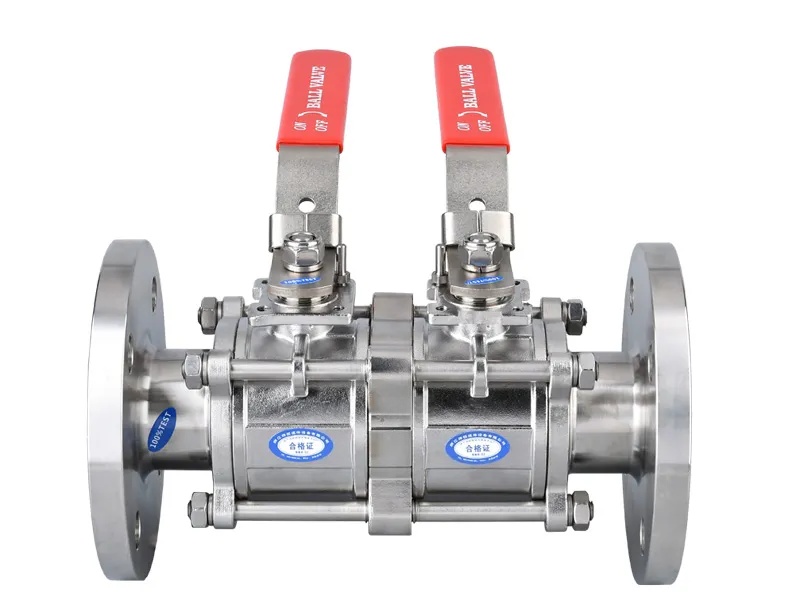
Core purpose: To connect pipelines while preventing contamination, eliminating dead legs, and supporting CIP/SIP cleaning processes. The design philosophy prioritizes the ability to drain completely, clean effectively, and resist microbial adhesion over structural simplicity .
2. Classification by Connection Type
Sanitary fittings are available in three primary connection methods, each suited to different applications :
Tri‑Clamp fittings are the most widely used in sanitary systems. They allow tool‑free assembly and disassembly, enabling rapid cleaning, inspection, and component replacement without specialized tools .
3. Classification by Function
Sanitary fittings are categorized by the role they perform in the piping system :
| Fitting Type | Function | Typical Use |
|---|---|---|
| Elbow | Changes pipe direction (45°, 90°) | Pipeline turns and bends |
| Tee | Three-way connection; splits or combines flow | Branch lines, distribution headers |
| Reducer | Connects pipes of different diameters | Size transitions in process lines |
| Cap / Plug | Seals the end of a pipe | Temporary closures, spare ports |
| Union | Removable coupling for quick disconnection | Maintenance points, frequently accessed sections |
| Cross | Four-way connection | Complex manifold assemblies |
| Adapter | Connects different fitting types or standards | System compatibility transitions |
4. Material Selection
4.1 Stainless Steel Grades
| Grade | Characteristics | Recommended Application |
|---|---|---|
| 304 Stainless Steel | Good corrosion resistance, cost-effective | General food and beverage processing |
| 316L Stainless Steel | Superior chloride resistance due to molybdenum (Mo) content; low carbon prevents weld corrosion | Pharmaceutical, biotech, chlorine-containing CIP systems, aggressive media |
316L is the preferred material for most sanitary applications. The "L" designation (≤0.03% carbon) prevents intergranular corrosion after welding, ensuring long-term durability .
4.2 Surface Finish Requirements
Surface finish directly impacts cleanability and microbial resistance:
| Grade | Ra Value | Application |
|---|---|---|
| Standard sanitary | ≤ 0.8 μm | General food, beverage, dairy processing |
| High-grade sanitary | ≤ 0.5 μm | Premium food, cosmetics, high-purity water |
| Aseptic / Electropolished | ≤ 0.4 μm | Pharmaceutical, biotech, WFI systems |
Why it matters: Smooth surfaces prevent biofilm formation and microbial adhesion, ensure effective CIP cleaning, and facilitate complete drainage .
4.3 Gasket (Seal) Materials
Gaskets are the critical sealing interface in Tri‑Clamp connections :
| Material | Temperature Range | Suitable For | Not Suitable For |
|---|---|---|---|
| EPDM | -40°C to +150°C | Water, steam, alkaline CIP, food products | Oils, hydrocarbon solvents |
| Silicone | -60°C to +200°C | High-purity food, pharmaceutical, low absorption | Steam, strong acids, oils |
| PTFE | -200°C to +260°C | Strong acids, alkalis, extreme chemical environments | Strong alkalis at high temperature (creep risk) |
| FKM (Viton) | -23°C to +150°C | Oils, organic solvents, high-temperature | Amines, ketones, live steam |
Selection rule: For CIP/SIP cycles involving both chemicals and steam, EPDM is the most common choice. For oil-containing media, choose FKM or PTFE.
5. Dimensional Standards
Sanitary fittings follow international standards to ensure compatibility across manufacturers :
| Standard | Origin | Typical Size Range |
|---|---|---|
| ISO | International | DN10 – DN150 (12.7mm – 319.3mm OD) |
| 3-A / IDF | USA / Dairy | 1/2″ – 12″ |
| DIN | Germany | DN10 – DN150 |
| ASME BPE | USA / Biopharmaceutical | 1/2″ – 12″ (with specific surface finish grades SF1–SF6) |
Important sizing note: For Tri‑Clamp fittings, the outside diameter (OD) is the same for 1/2″ and 3/4″ sizes—only the inside diameter (ID) varies to provide different flow capacities. Always size fittings based on tube OD, not flange OD .
6. Key Certifications and Standards
| Certification / Standard | Applicable Scope | Core Requirement |
|---|---|---|
| 3-A Sanitary Standards | US food, dairy, pharmaceutical | Hygienic design, cleanability, minimizes contamination risk |
| FDA 21 CFR | Food and drug contact materials | Safe materials, no harmful leachables |
| EHEDG | European food, pharmaceutical | Hygienic engineering design certification |
| ASME BPE | Biopharmaceutical | Surface finish, traceability, welding control, material verification |
| USP Class VI | Pharmaceutical, biotech | Biocompatibility testing, sterility, leachables assessment |
For biopharmaceutical applications, ASME BPE is the most highly regarded standard. For food and dairy, 3‑A certification is essential .
7. How Sanitary Fittings Prevent Contamination
Sanitary fittings are engineered to eliminate contamination risks through multiple design features :
Smooth, crevice‑free design: Eliminates spaces where residue or bacteria can accumulate
Full drainage geometry: Prevents dead legs where stagnant product could spoil
Secure sealing: Gaskets ensure a tight seal, preventing leaks or ingress
CIP/SIP compatibility: Supports clean‑in‑place and sterilisation‑in‑place processes without disassembly
Material traceability: Complete documentation chain (MTRs, heat numbers) supports audit readiness
8. Dead Leg Prevention: The 2D/3D Rule
A dead leg is a section of pipe where fluid does not flow—creating a contamination risk. Industry guidance recommends the 2D rule (ASME BPE): the distance from the main pipe wall to the valve sealing point should be less than twice the branch diameter .
Design strategies to reduce dead legs :
Use short‑outlet tees with minimal branch length
Avoid offset or eccentric connections where possible
Specify T‑port or L‑port multi‑way valves for branch control
Ensure proper gasket alignment during installation to prevent gasket‑induced crevices
9. Key Selection Criteria
10. Common Selection Mistakes to Avoid
11. Industries and Applications
12. Procurement Checklist for Sanitary Fittings
Before placing an order, verify the following:
Material grade (304 vs 316L) and carbon content (L grade) confirmed
Surface finish specification with Ra value and test method (mechanical vs electropolished)
Connection type (Tri‑Clamp, welded, threaded) and dimensional standard (ISO, 3‑A, ASME BPE)
Gasket material, temperature rating, and FDA/USP Class VI certification (if required)
Material Test Reports (MTRs) with heat number traceability
Third‑party test reports (SGS or equivalent) for compliance
Visual inspection for surface defects upon delivery
Sample validation before bulk procurement—verify dimensions, finish, and sealing performance


