


Hygienic Valve and Fitting Selection for Bottled Water Filling Lines
Bottled water production demands stringent hygiene standards. Every component contacting the product must meet food-grade requirements, resist corrosion from cleaning agents, and support CIP (Clean-in-Place) processes. The filling line environment presents unique challenges: high humidity, frequent washdowns, and the need for reliable automated control to maintain production throughput.
This guide focuses on selecting the right valves and fittings for bottled water filling lines, covering hygiene requirements, material considerations, and critical valve types.
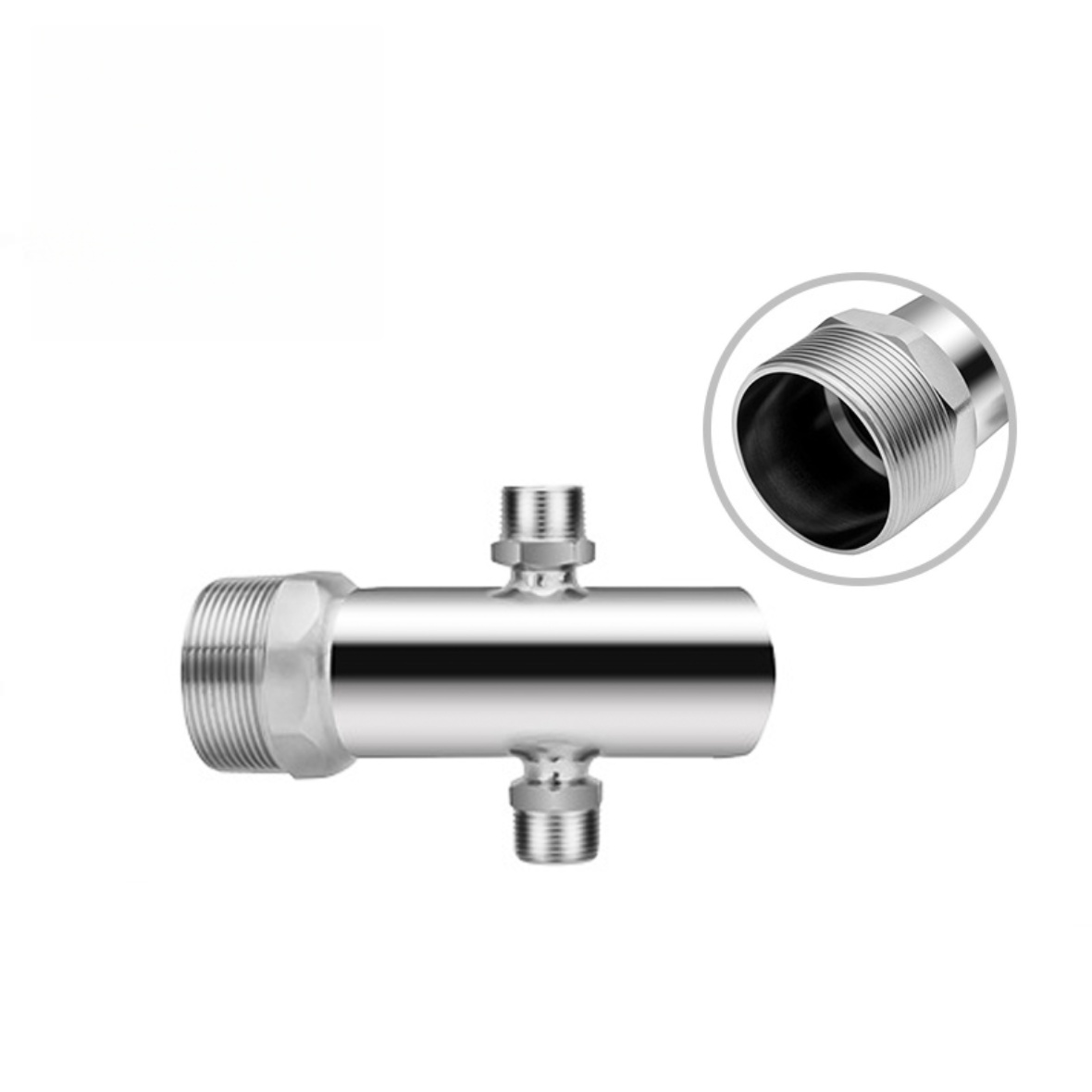
1. Key Hygiene Requirements for Bottled Water Filling Lines
Bottled water filling lines process a product that must meet strict potable water quality standards. Unlike carbonated or flavoured beverages, bottled water has minimal preservatives or additives, making it more susceptible to contamination from microbial growth in the system .
Key hygiene requirements:
| Requirement | Specification | Importance |
|---|---|---|
| Surface finish | Internal surfaces Ra ≤ 0.8 μm | Prevents bacterial adhesion and biofilm formation |
| Material | 304/316L stainless steel | Corrosion resistance, no heavy metal leaching |
| Connection design | Crevice-free, fully drainable | Eliminates product hang-up and contamination points |
| Seal materials | Food-grade EPDM, silicone, PTFE | Must withstand cleaning chemicals and temperature cycles |
| CIP compatibility | Built to withstand CIP cleaning cycles | Reduces downtime and manual cleaning effort |
Hygienic valves differ from standard industrial valves in three key aspects: the material must be corrosion-resistant, the design must be crevice-free to prevent product hang-up, and the valve must withstand CIP/SIP systems without degrading .
2. Critical Valve Types for Bottled Water Filling Lines
2.1 Hygienic Butterfly Valves
Butterfly valves are widely used in water filling lines for their compact design, quick operation, and suitability for large-diameter piping . They are typically used for:
CIP supply and return circuits
Tank inlet/outlet isolation
Main water supply lines
Selection considerations:
Body and disc: 316 stainless steel
Seal: EPDM (food-grade, suitable for CIP, temperature range -40°C to 110°C)
Actuation: Manual for infrequent operation; pneumatic for automated circuits
2.2 Hygienic Ball Valves
Ball valves offer full-bore design, ensuring zero flow restriction, which is ideal for high-capacity filling lines and cleaning media circulation . They are excellent for on/off control and CIP systems.
Selection considerations:
Full port design minimises pressure drop
Cavity-filled seats eliminate dead spaces
Suitable for higher pressures than butterfly valves
2.3 Hygienic Diaphragm Valves
Diaphragm valves are preferred for aseptic boundaries, sampling points, and WFI (Water for Injection) systems . They provide bubble-tight shutoff and are exceptionally easy to clean, making them ideal for critical control points.
Selection considerations:
Diaphragm material: EPDM or PTFE/EPDM composite
Weir-type: most common for water applications
Manual or pneumatic actuation
2.4 Fill Valves (Filling Nozzles)
Fill valves are specialised components at the heart of the filling machine. In modern high-speed filling systems, these valves are typically:
304/316 stainless steel construction
Designed for gravity or pressure filling
Gap-free design to prevent leakage and facilitate CIP cleaning
No springs in product contact area to eliminate crevices and reduce cleaning dead spots
3. Material Selection
3.1 Stainless Steel Grades
All 304/316 stainless steel components are acceptable for bottled water production. The choice depends on the specific cleaning chemicals used. For operations using chlorinated CIP, 316L is strongly recommended .
3.2 Seal Materials
For high-temperature filling (e.g., hot-fill or warm-fill processes), seals must withstand 85-95°C. Silicone and PTFE are recommended for product contact areas, while NBR may be acceptable for non-contact areas .
4. Fitting Selection
4.1 Connection Types
| Connection | Application | Notes |
|---|---|---|
| Tri-Clamp | Quick disassembly for cleaning | Most common in sanitary systems |
| Welded | Permanent connections | No joints, highest hygiene; used in filler manifolds |
| Threaded | Auxiliary services | Not recommended for product contact lines |
4.2 Fittings to Avoid
Threaded fittings in product contact areas: Threads create crevices that are difficult to clean and can harbour bacteria. Use Tri-Clamp or welded connections instead.
Ordinary flanges: Without proper radial gasket alignment, the gasket can shift during installation, creating crevices .
Dead-leg connections: Long branch sections that can trap product. Keep branch length short.
5. CIP/SIP Compatibility
Valves and fittings in filling lines must withstand CIP cleaning cycles, which typically involve:
Hot water rinse (70-80°C)
Alkaline wash (1-2% NaOH, 70-85°C)
Intermediate rinse
Acid wash (nitric or phosphoric acid, 60-70°C)
Final rinse
Selecting components that can handle these chemicals without degrading ensures long service life .
6. Summary Checklist
| Check Item | Specification |
|---|---|
| Material | 304 or 316L stainless steel |
| Surface finish | Ra ≤ 0.8 μm |
| Seal material | EPDM (food-grade) |
| Connection type | Tri-Clamp or welded for product lines |
| Valve type (isolation) | Butterfly or ball valve |
| Valve type (critical control) | Diaphragm valve |
| CIP compatibility | Verified |
7. Recommended Product Types
| Application | Recommended Valve |
|---|---|
| Large-diameter CIP circuit isolation | Sanitary Butterfly Valve (pneumatic/EPDM) |
| Main water supply isolation | Sanitary Ball Valve (full port) |
| Sampling point/asceptic boundary | Sanitary Diaphragm Valve |
| Filling nozzle manifold | Specialised fill valves (no springs, crevice-free) |


