


Bottled Water Filling Line Valve and Fitting Selection Guide (Complete Edition)
In bottled water production, the efficiency, precision, and hygiene of the filling line largely depend on a often-overlooked core component—the valve and fitting system. Industry research data shows that the efficiency and stability of the filling system contribute to 30–40% of the entire production line's performance variation, and nearly 60% of recurring production issues can be traced back to mismatched or improperly selected filling valve technology.
This guide provides a systematic reference for engineering, procurement, and technical personnel in bottled water production facilities.
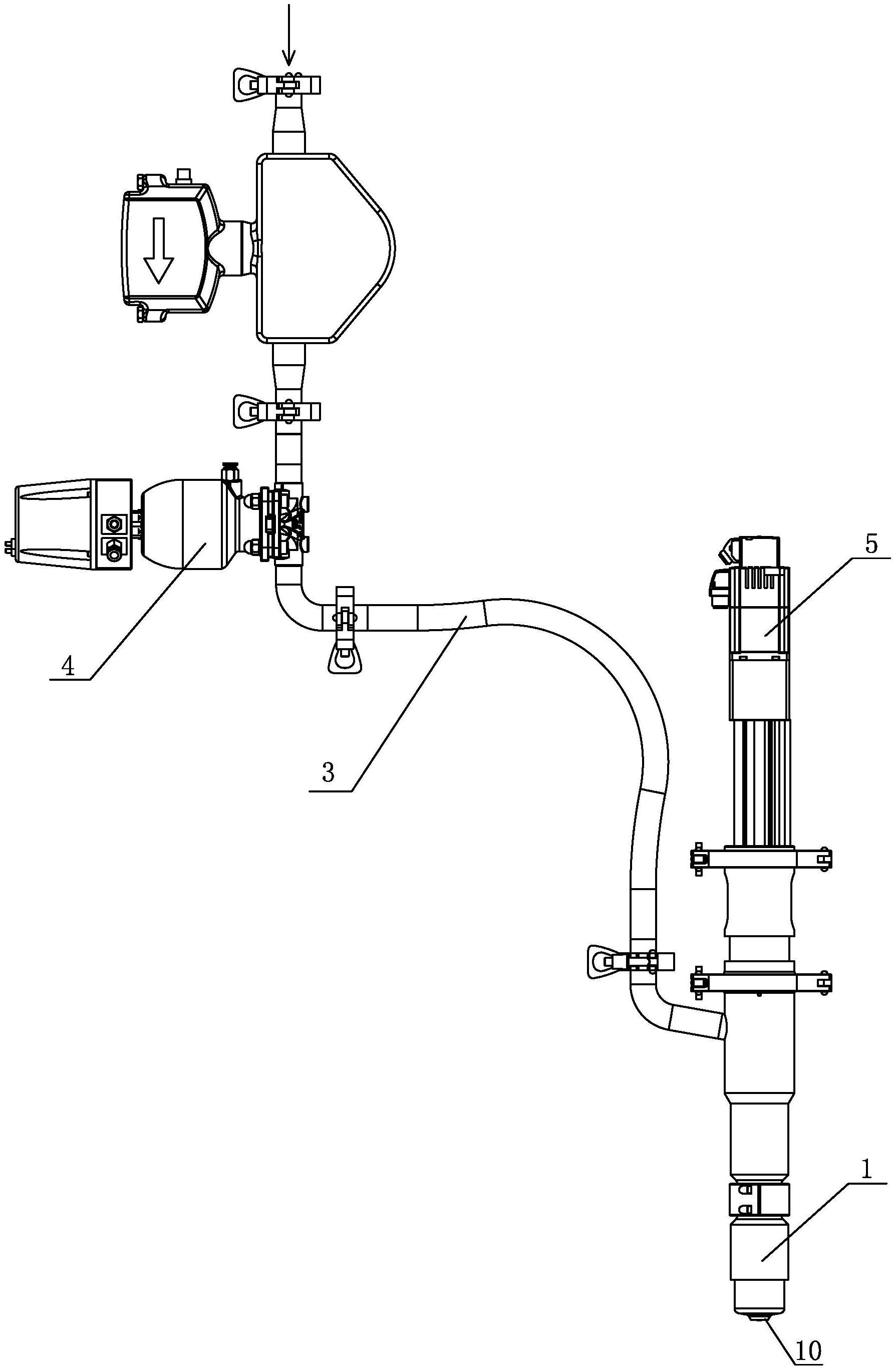
1. Overview of Valve Requirements in Bottled Water Filling Lines
A complete bottled water filling line typically includes water treatment systems, preform blowing, rinse-fill-cap (RFC) monobloc, labelling, and packaging sections. Each section has different functional requirements for valves:
| System Section | Valve Function Requirements | Key Requirements |
|---|---|---|
| Water treatment system | Flow control, pressure regulation, isolation | Corrosion resistance, no leachables, CIP support |
| Filling machine (RFC) | Precise fill valve control, CIP switching | High precision, zero leakage, easy cleaning |
| CIP circuit | Cleaning solution supply/return switching | Chemical resistance, clean-in-place capable |
| Conveying and auxiliary systems | Pneumatic control, discharge | Food-grade materials, hygienic design |
2. Sanitary Valve Selection by Function
2.1 Fill Valves: The "Heart" of the Filling Line
Fill valves are the core components of the filling machine, directly affecting filling accuracy, production speed, and product consistency. Bottled water filling primarily uses two technical approaches:
Gravity fill valves are the most common bottled water filling method, relying on gravity or low-pressure assistance to allow water to flow into the bottle. The operating principle is based on liquid level control: when the liquid level in the bottle reaches the internal return tube height, air displacement stops, and flow automatically terminates. The advantages of this purely mechanical structure are minimalist design, low failure rate, and easy maintenance, making it suitable for small-to-medium production capacities (≤10,000 bottles/hour) and standard bottle formats.
Atmospheric filling systems represent an automated upgrade of gravity filling. In modern high-speed filling lines, rotary filling structures are commonly used, with constant liquid level technology ensuring that each filling head operates at the same liquid level. Fill valves are controlled by PLC for opening and closing timing, ensuring precise filling after bottle positioning.
Sanitary butterfly/ball valves in filling systems: In the main supply lines and CIP return lines of filling machines, pneumatic sanitary butterfly and ball valves are widely used for automated switching. In high-speed rotary fillers, valve response time must match the filling rhythm (typically requiring valve opening/closing within 0.5–2 seconds).
2.2 Isolation and Switching Valves: The Backbone of Piping Control
In addition to fill valves, various isolation and switching valves are needed in the filling line:
| Valve Type | Recommended Product | Application Scenario | Key Requirements |
|---|---|---|---|
| Main supply line isolation | Pneumatic sanitary butterfly valve | Supply control from tank to filling machine | 316L body, EPDM seal, fast response |
| Branch line switching | Sanitary ball valve (full port) or 3-way ball valve | CIP supply/return circuit switching | Zero pressure drop, cavity-filled design |
| Aseptic boundary/sampling | Sanitary diaphragm valve | Pre-fill sampling points | Dead-leg-free, bubble-tight sealing |
| Fill head supply | Special atmospheric fill valve | Each filling head on the rotary platform | Precise liquid level control, no dripping |
Pneumatic sanitary butterfly valves are the workhorse of filling line automation. Their advantages include: fast response (0.5–5 seconds for opening/closing), matching high-speed filling line rhythms; stainless steel body and EPDM seals meeting FDA food-grade requirements; CIP cleanable; and quick daily maintenance without removal from the piping.
2.3 Pressure Regulating Valves: Maintaining Constant Filling Pressure
The supply pressure to the filling machine directly affects filling accuracy and speed, making stable supply line pressure critical. Hygienic pneumatic control valves (CPM valves) are typically installed on the main supply line to stabilise filling pressure.
CPM (Constant Pressure Modulating) valves can rapidly adjust valve position through pneumatic feedback without electronic control, maintaining supply line outlet or inlet pressure at the setpoint. Typical applications include: outlet pressure control on filling machine supply lines and back-pressure control on CIP return lines.
3. Material Selection
3.1 Stainless Steel Valve Body Materials
| Material | Characteristics | Application in Filling Lines |
|---|---|---|
| 304 Stainless Steel | Good corrosion resistance, lower cost | General water contact, non-corrosive environments |
| 316/316L Stainless Steel | Contains molybdenum (Mo), superior chloride resistance | Chlorine-containing CIP chemical contact, high-purity applications |
Bottled water filling lines typically use 316L stainless steel valves, especially for piping that contacts CIP chemicals (sodium hypochlorite, nitric acid, etc.).
3.2 Seal Materials
| Material | Temperature Range | Suitability for Filling Lines |
|---|---|---|
| EPDM | -40°C to +130°C | Food-grade, CIP chemical resistant, most commonly used in filling lines |
| Silicone | -60°C to +200°C | High-purity applications, but not steam-resistant |
| PTFE | -200°C to +260°C | Resists strong corrosive chemicals, suitable for high-temperature CIP |
| FKM (Viton) | -20°C to +200°C | Oil and chemical resistant, higher cost |
4. Core Fill Valve Selection Decision: Gravity vs High-Speed Solutions
This is one of the most critical decisions for bottled water filling lines.
| Comparison Dimension | Gravity Fill Valves | High-Speed Integrated Filling Systems |
|---|---|---|
| Filling principle | Gravity/liquid level control | Optimised flow paths + closed-loop pressure control |
| Production speed | Medium (≤10,000 bottles/hour) | High (10,000–60,000+ bottles/hour) |
| Filling accuracy | ±1.0–2.0% | ±0.3–0.5% |
| Automation level | Basic mechanical control | PLC + servo automation |
| Initial investment | Low | Medium-high |
| Maintenance complexity | Simple | Moderate |
| Changeover flexibility | Limited (standard bottles only) | Widely compatible with multiple bottle types |
| Product loss rate | Medium (1.0–3.0%) | Low (0.2–0.8%) |
Data sources: Journal of Food Engineering, Grand View Research, Packaging Technology and Science, 2024–2025
Selection recommendations:
Small-to-medium capacity (≤10,000 bottles/hour), standard bottle formats, new market entrants → Gravity mechanical fill valves
Large-scale production (≥24,000 bottles/hour), planned capacity expansion, multi-specification production → High-speed integrated filling systems
5. Installation and Maintenance Key Points
5.1 Installation Essentials
Tri-clamp connections recommended for valve-to-filling machine connections for quick disassembly and cleaning
Ensure vertical alignment between fill valve and bottle mouth, and intact sealing rings
Maintain a straight pipe section upstream of the main supply line valve for stable fluid flow
5.2 Maintenance Frequency Reference
| Maintenance Item | Recommended Frequency | Basis |
|---|---|---|
| Fill valve seal inspection | Every 1–2 years | Industry standard recommendation |
| Pneumatic valve air tightness test | Monthly | Ensure switching response time |
| CIP circuit valve cleaning validation | After each batch | Riboflavin testing |
5.3 Common Faults and Troubleshooting
| Fault Symptom | Possible Cause | Troubleshooting Method |
|---|---|---|
| Inconsistent fill levels | Supply pressure fluctuation, worn fill valve seals | Check CPM regulator setting, replace seals |
| Fill valve dripping | Damaged seal ring, worn disc | Replace seal ring or fill valve assembly |
| Incomplete CIP cleaning | Stuck CIP switching valve or seal leakage | Check switching valve, clean valve seat |
6. Summary and Selection Checklist
| Check Item | Requirement / Specification |
|---|---|
| Valve body material | 316L stainless steel |
| Surface finish | Ra ≤ 0.8μm |
| Seal material | EPDM (food-grade) |
| Connection type | Tri-clamp or welded (product contact lines) |
| Fill valve type | By capacity: ≤10,000 BPH → gravity; ≥24,000 BPH → high-speed integrated system |
| Main supply isolation valve | Pneumatic sanitary butterfly valve |
| CIP circuit switching | Sanitary ball valve / 3-way ball valve |
| Aseptic boundary / sampling | Sanitary diaphragm valve |
| Pressure control | CPM pneumatic control valve |


