


The Ultimate Guide to Valve Selection (Overview)
In the oil & gas, chemical, power generation, water treatment, metallurgy, pharmaceutical and many other industrial sectors, valves are among the most numerous, widely distributed, and critical components in fluid control systems. Correct valve selection directly affects system safety, control accuracy and maintenance costs. Wrong selection can lead to leakage, system failure, downtime and even safety incidents.
This series will start from the basic classification of industrial valves, systematically introduce the working principles, selection criteria, standard systems and application scenarios of various valve types, providing engineers and procurement professionals with a complete valve selection knowledge framework.
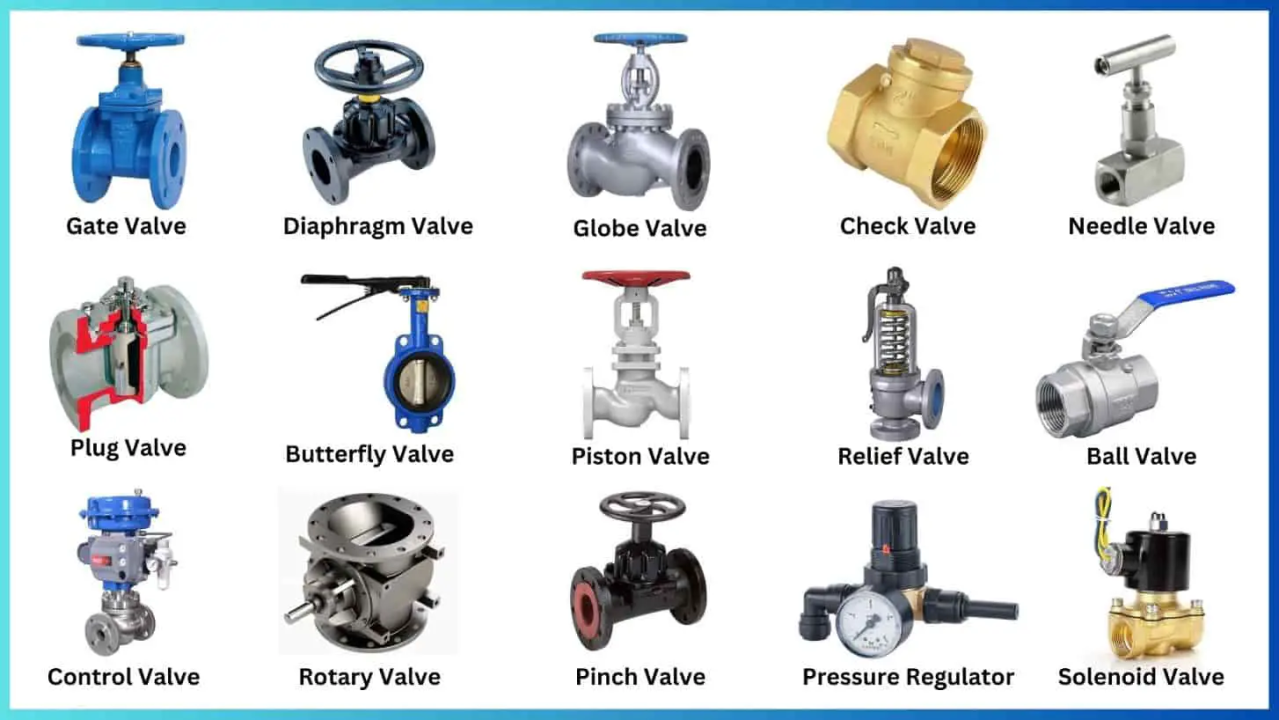
1. Basic Functions and Classification of Valves
1.1 The Five Core Functions of Valves
Valves in industrial fluid systems perform the following five main functions:
| Function Category | Role | Typical Valve Types |
|---|---|---|
| Isolation/Shut-off | Start or stop fluid flow | Ball, gate, butterfly, plug, diaphragm |
| Flow regulation | Modulate or throttle fluid flow | Globe, needle, control valves |
| Flow direction control | Ensure flow in intended direction or change direction | Check valves, multi-port ball valves |
| Overpressure protection | Prevent system pressure exceeding limits | Safety valves, pressure relief valves |
| Overflow control | Automatically shut off when flow exceeds limits | Excess flow valves |
1.2 Classification by Function and Structure
Based on function and application, industrial valves are divided into five main categories:
Isolation valves: Used to isolate or connect media flow, including gate, globe, ball, butterfly, plug and diaphragm valves
Control valves: Used to regulate flow rate, pressure, etc., including control valves, throttle valves, pressure reducing valves
Check valves: Used to prevent media backflow
Diverter valves: Used to separate, distribute or mix media
Safety valves: Used for overpressure protection
1.3 Classification by Operating Parameters
Valves can also be classified by pressure, temperature and actuation method:
By pressure rating:
Vacuum valves, low-pressure valves (PN≤1.6MPa), medium-pressure valves (PN 2.5-6.4MPa), high-pressure valves (PN 10-80MPa), ultra-high-pressure valves (PN≥100MPa)
By media temperature:
Cryogenic valves (t<-100°C), low-temperature valves (-100≤t≤-40°C), ambient-temperature valves (-40≤t≤120°C), medium-temperature valves (120-450°C), high-temperature valves (t>450°C)
By actuation method:
Manual valves, electric valves, pneumatic valves, hydraulic valves
2. The Core Selection Methodology: STAMPED
A standardised valve selection process should follow the STAMPED methodology, covering the following seven core dimensions:
| Dimension | Description |
|---|---|
| S – Size | Valve size determines flow capacity (Cv value) and must match the system's expected flow rate |
| T – Temperature | Consider process media and ambient temperature; temperature fluctuations affect seal material life |
| A – Application | Define the valve's required function: isolation, regulation, diversion or overpressure protection? |
| M – Media | Ensure body, seat and seals are chemically compatible with the media to avoid corrosion or embrittlement |
| P – Pressure | Distinguish between operating pressure and design pressure; system pressure rating is determined by the lowest-rated component |
| E – Ends (connections) | Select appropriate connection method: threaded, flanged, compression, welded, etc. |
| D – Delivery | Review supplier delivery capability, technical support and spare parts availability |
2.1 Size and Flow Coefficient (Cv)
The flow coefficient Cv is defined as: the volume of water (in US gallons) that flows through the valve per minute at a pressure differential of 1 psi and a temperature of 60°F. A higher Cv value means greater flow capacity – but bigger is not always better; the selection must match the actual system requirements.
Different valve types have significantly different Cv values due to internal flow path geometry: ball valves have very low flow resistance, while needle valves can restrict or slow flow. During selection, obtain Cv data from the manufacturer or use online Cv calculators as a preliminary reference.
2.2 Temperature Impact on Selection
Temperature affects valve selection in three aspects:
Seal materials: Temperature fluctuations may cause seal material expansion and contraction
Metal strength: High temperatures may cause metal components to lose strength, reducing pressure ratings
Seal materials (soft): PTFE seals are typically rated up to ~204°C, PEEK can withstand over 230°C, graphite packing can handle over 400°C
2.3 Pressure-Temperature Relationship
Pressure and temperature are closely interdependent – as process fluid temperature increases, the pressure rating typically decreases. Selection must simultaneously confirm that both operating pressure and temperature conditions fall within the valve's rated range, with appropriate safety factors.
2.4 Material and Media Compatibility
Ensure that the valve body, seat, stem tip and other soft seal materials have good compatibility with the system media. Incompatibility may lead to corrosion, embrittlement or stress corrosion cracking.
Mainstream valve material options:
Stainless steel 316L: Excellent corrosion resistance and mechanical strength – suitable for most chemical fluids and industrial gases
Brass: Lower cost, suitable for non-corrosive media, but pressure rating is lower (generally ≤3000 psig)
Carbon steel: High strength, suitable for high-temperature steam systems
Plastics (PVC/CPVC/PTFE) : Lightweight, corrosion-resistant, suitable for chemical and water treatment applications
3. Common Valve Types at a Glance
Each of the following valve types will be covered in detail in subsequent articles of this series:
| Valve Type | Core Function | Typical Applications |
|---|---|---|
| Gate Valve | Linear motion, on/off | Water systems, steam, oil pipelines |
| Globe Valve | Flow regulation | Throttling and frequent adjustment applications |
| Ball Valve | Quarter-turn quick shut-off | Pipelines requiring rapid isolation |
| Butterfly Valve | Quarter-turn, high flow | Large-diameter piping, ventilation systems |
| Check Valve | Prevents backflow | Pump discharge, compressor systems |
| Plug Valve | Quarter-turn quick shut-off | Slurries, corrosive media |
| Diaphragm Valve | Sanitary control | Pharmaceutical, food industries |
| Safety Valve | Overpressure protection | Pressure vessels, boilers |
| Needle Valve | Precision throttling | Instrument sampling, low-flow control |
4. Major Industrial Application Sectors
Industrial valves are used across all sectors involving fluid control. In the global market, the oil & gas sector accounts for the largest share (~37%), followed by power generation (~21%) and chemical (~11%).
| Application Sector | Typical Requirements | Valve Characteristics |
|---|---|---|
| Oil & Gas | Wellhead control, pipeline transport, refining | High pressure, corrosion-resistant, fire-safe design |
| Power Generation | Steam control, cooling water systems | High temperature, high pressure, safety valves |
| Chemical/Petrochemical | Corrosive media, precise regulation | Corrosion-resistant alloys, special seals |
| Water Treatment | Municipal water supply, wastewater treatment | Large diameter, low pressure drop |
| Pharmaceutical/Food | Aseptic processing, cleanliness requirements | Hygienic grade, tri-clamp connections |
5. Series Article Preview
| No. | Article Title | Planned Content |
|---|---|---|
| 1 | Industrial Valve Selection Ultimate Guide (Overview) | Valve classification, selection process, STAMPED method (this article) |
| 2 | Gate Valve Selection Guide | Wedge/parallel, rising/non-rising stem, applications |
| 3 | Globe Valve Selection Guide | Globe vs gate comparison, flow characteristics, T/Y/angle patterns |
| 4 | Check Valve Selection Guide | Swing/lift/spring types, installation position |
| 5 | Ball Valve Selection Guide | Floating/trunnion, full/reduced port, fire-safe design |
| 6 | Butterfly Valve Selection Guide | Concentric/single/double/triple offset comparison |
| 7 | Plug Valve Selection Guide | Lubricated/non-lubricated, multi-port applications |
| 8 | Diaphragm Valve Selection Guide | Weir/straight-through, diaphragm materials |
| 9 | Needle Valve Selection Guide | Precision throttling, instrument sampling applications |
| 10 | Safety & Relief Valve Selection Guide | Set pressure, discharge capacity, standards |
| 11 | Valve Actuator Selection Guide | Manual/pneumatic/electric/hydraulic comparison, torque calculation |
| 12 | Valve Pressure Ratings & Standards Systems | Class/PN comparison, ASME/API/ISO standards |
| 13 | Industrial Valve Material Selection Guide | Carbon steel/stainless steel/alloys/special materials |
| 14 | Valve Leakage Classification & Sealing Standards | API 598, FCI 70-2, ISO 5208 |
| 15 | Industrial Valve Installation & Maintenance Guide | Installation standards, fault diagnosis, maintenance strategies |


